Yes Or Yes? … No!

My current host in Australia had an extra ticket for an internet marketing seminar and invited me to join him. I presumed it would be some sort of scam/pyramid scheme but as I’ve never been to one of these events it qualified as an anthropological experience. It did not disappoint!
20130620_090614 (800x555)

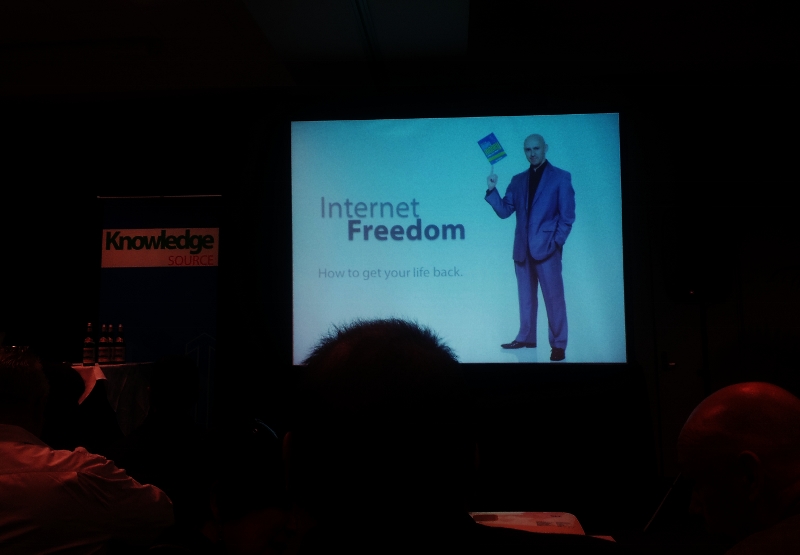
Seriously photoshoped pic of the lecturer


Around 100 people gathered at the conference room of some local hotel, most of them were around 60+ years old, obviously not the most internet savvy.  The lecturer spent the first hour saying ‘I’ more times than I could count. He recounted his life story filled with small failures, allowing people to relate to him and large successes, flashing the immense amount of money he’s made, causing them to look up to him. If you, like me, are wondering why such a successful entrepreneur would spend his time in these small seminars? Well, if you choose to believe him, he only teaches 30 days a year because he wants to give back to the community.

His rhetoric’s was straight out of a parody on self-help lectures, or maybe evangelist ceremonies. Forcing the audience to complete his sentences, making them move for him and repeating over and over: “Yes or Yes?” leaving no room for disagreement while they all chanted after him “Yes”. His self-contradictions were just as funny saying things like: “My book has everything in it and we’ll go through most of it today and so much more than what is in the book.”

Perhaps trying to avoid potential lawsuits, he gave a disclaimer saying that there was no guarantee for success, it was up to us. He concluded this part with a long story I don’t really remember but the lesson was “If you want to make money you have to want it more than the air in your lungs!”

The next session was about convincing us that an internet based business is the best and easiest way to make money. In fact the best way to do it was to write an e-book on some niche topic and sell it (which is actually sort of what I’m trying to do with Young Hero Tales minus the selling part). There was actually some info here, mostly how to outsource and get others to do everything for you from writing content to building your web site to marketing. There was some general good advice about making your customers feel unique and how to market an idea. He also mentioned some useful web sites for researching traffic and outsourcing. In-between these recommendations he slipped in some of the websites he actually owns and offered people licenses for marketing his products. All they had to do was build a web site, which could be done using his tools and hosted by a company he is vested in. A ‘one stop shop’, in his words, a Pyramid scheme, in my opinion.

20130620_131526 (800x513)

15 minutes until the discount runs out! can you see how i’m running? out of the door!

I asked him what he thought about the donation model as my generation does not pay for content. He turned the question to me “How do you do that?”
Based on success stories like Amanda Palmer I told him “By connecting to your customers, getting them to like you and creating good content. If they want you to keep on creating they will support you”. He liked the part about connecting to your customers but was obviously disgusted by asking for donations. He even hinted that I must have a self-esteem problem if I don’t want to charge people. “If you want to succeed you have to change your model or change the market you are targeting because this is not how the world works!” he said. To which I replied “Or change the world”, which actually left him at a loss of words for about a second and a half. I guess I don’t want to make money as much as I want the air in my lungs and the truth is I don’t want to live in that type of world, I seriously hope I’m not alone in this.

Finally, before lunch break, came the pressure to register to his mentoring program. He used the same methods he recommended to us moments earlier, trying to make us feel special just by coming to his lecture. He gave a special offer for just 15 minutes saying that his experience shows that ‘those that can make fast decisions’ are the ones that succeed. He even shoved in some fear tactics by saying “What is your plan if you don’t come to this program?” My bet is he paid the first guy that came up to register and maybe even the second. Unfortunately there were more than just two people waiting to register when I left.


Permaculture 101

I set out to spend between two to three weeks on a permaculture farm in sunshine coast to discover whether permaculture was a hippy thing or if there was some real science behind it. Between the ticks, mosquitos, rain, cold and hard work I felt that I was on a survivor T.V episode from which I voted myself off after only 11 days. I still came back with some answers… Here’s my story.

 The chickens were supposed to be my 'tractor' not the other way around!


The chickens were supposed to be my ‘tractor’ not the other way around!

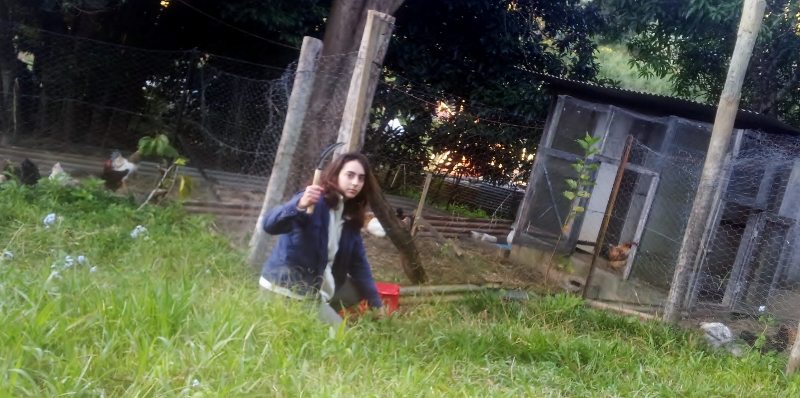
Permaculture is supposed to be a unique way of doing agriculture by linking different systems together (animal, plant, energy, water, building…) in order to create a sustainable mega system which conserves energy, manpower and the earth. So why did I find myself waking up at 6 a.m. cutting grass for the chickens in the cage behind me? Good question!

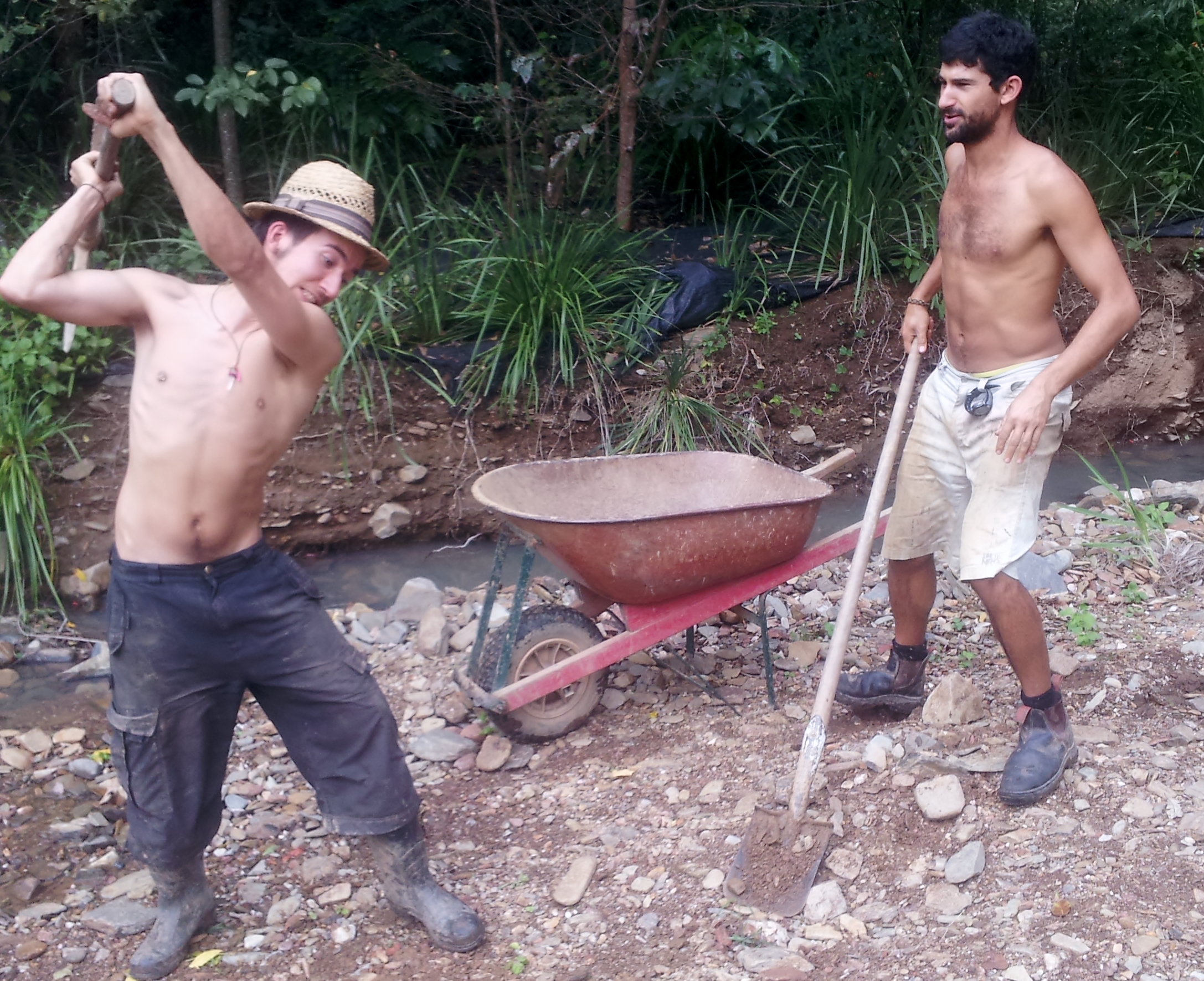
Slave labor, collecting gravel for the gray water filter

Slave labor, collecting gravel for the gray water filter

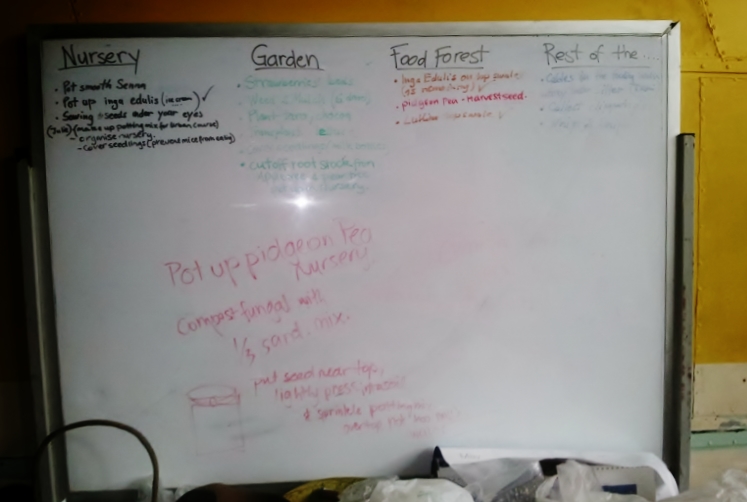
It turns out this particular farm’s actual income was teaching Permaculture courses. That meant there was a need to display all aspects of permaculture on the farm, composting, animal systems, nursery, garden, food forest etc. Yet, there wasn’t enough manpower or smart design to link these systems together. So there was actually a very high work load for very little produce. The upside of this was that I got to see all of the aspects at play and learn a lot. So how does it work?


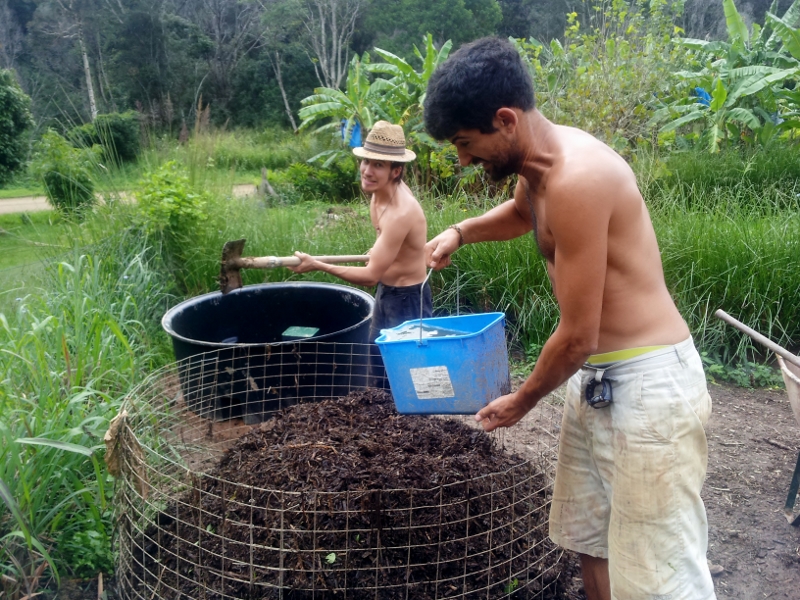
The Compost Toilet had to be dumped into the compost heap manually.

The Compost Toilet had to be dumped into the compost heap manually.

Maybe to you it seems obvious but I learned that growing things means you need good soil, especially the first few meters of the soil which should contain a lot of humus. Don’t get confused like I did, that doesn’t mean the chickpea paste we eat in Israel, it means organic matter that has broken down into the ground. That’s where the linkage with animal systems is supposed to come in play. Animal waste is actually good for the ground. It also means there were a million earth worms wriggling around every time I planted something and that we had to deal with, literally, a lot of shit! Animals are also supposed to help with weeding and eating bad slugs that eat your food.  Organic matter can also come from other plants so in permaculture some plants are used as ‘support plants’, you chop off material from and drop on the ground as mulch. These plants can also be used as food for the animals linking the system back into itself. Unfortunately, this was not really done on the farm, and I was working much harder to feed the animals then they were working to feed me.

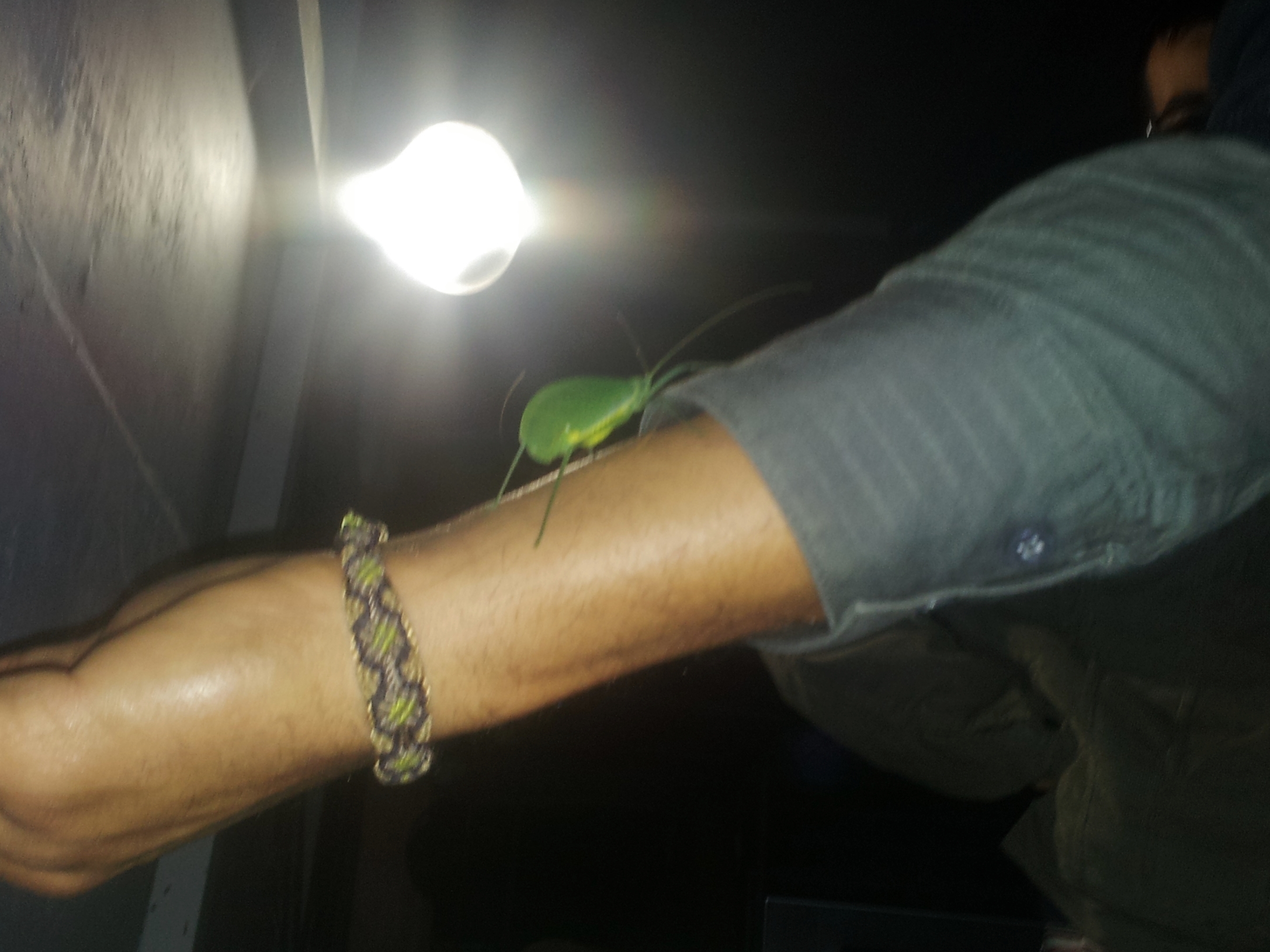
Just some of the strange insects around the farm

Just some of the strange insects around the farm

Another system that is closely linked is the water system. For instance by digging out water drainage swells one can preserve rain water and force it to go into the ground slowly. This seemed a little redundant on the farm when I was there as it was constantly raining! I have to say I felt cheated by the name “Sun Shine” coast.

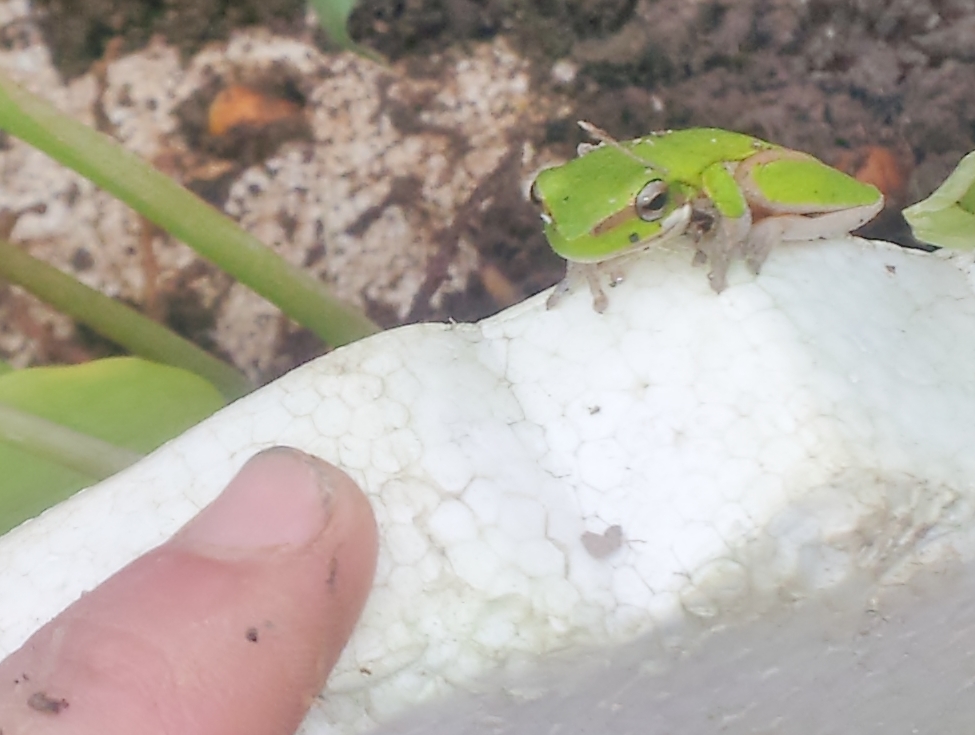
Poisonous?

Poisonous?

Despite the fact that the farm was far from producing all its food, the managers were almost obsessed with eating ‘healthy’. So for the first time in., well forever, I went for more than a week with no processed food. No Tim Tams, no peanut butter, no chocolate bars, no coca cola, no granola bars, no corn flakes! The first few days I was really craving chocolate, but that did pass and I noticed one tea spoon of organic whatever suger was more than enough in my coffee. In my first supermarket visit since I managed to resist the temptation to buy a chocolate bar, any bets how long this will last?

Harvesting human urine had never been so amusing

Harvesting human urine has never been so amusing

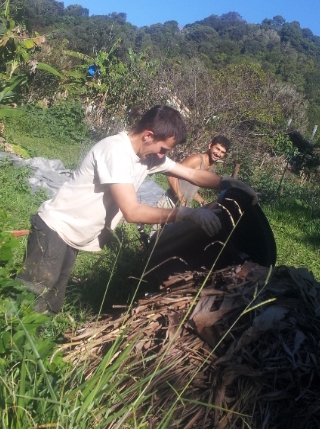
Anyway, I was lucky enough to have stayed there with 3 other woofers (volunteers who get fed for their work), who made my time on the farm a little less harsh and more amusing. And from the Italian guy’s stories, it could be much worse, we could be in Africa.

Complexity of the farm!

Complexity of the farm!

We spent our nights watching permaculture videos in a converted bus that was filled with mice, spiders, moths and mold. I also managed to go through 100 pages of a basic permaculture book. These obviously don’t make me an expert but here are my conclusions. Permaculture can never be a replacement for modern agriculture unless we all go back to growing our own food (which I personally don’t see a point in). The complexity of the system means it has to be constantly supervised and maintained, and although smart design leads to robust systems, harvesting the food for actual use in this system is complicated and time consuming because the place actually turns into a forest! You have to scavenge and gather it (which as yet no machine is able to do).

Despite that, I am convinced that Permaculture is not a ‘hippy’ thing. In fact, I’d say hippies are giving it a bad name. There are villages in Africa and India where permaculture has saved people from growing hungry. It has nurtured soil destroyed by modern agriculture (that doesn’t put nutrients back into the ground), thus enabling them to grow their own food. It could also come in handy for families or small communities wishing to get some good fruits and vegetables and some eggs without too much effort. Finally, modern agriculture could learn a thing or two (or three) from permaculture about preserving soil and water. So that’s about it, the good, the bad and the ugly!


Hippy Tales

Traveling up the east coast in Australia brought me to some close encounters with the species that is commonly known as a ‘hippy’ – read on…


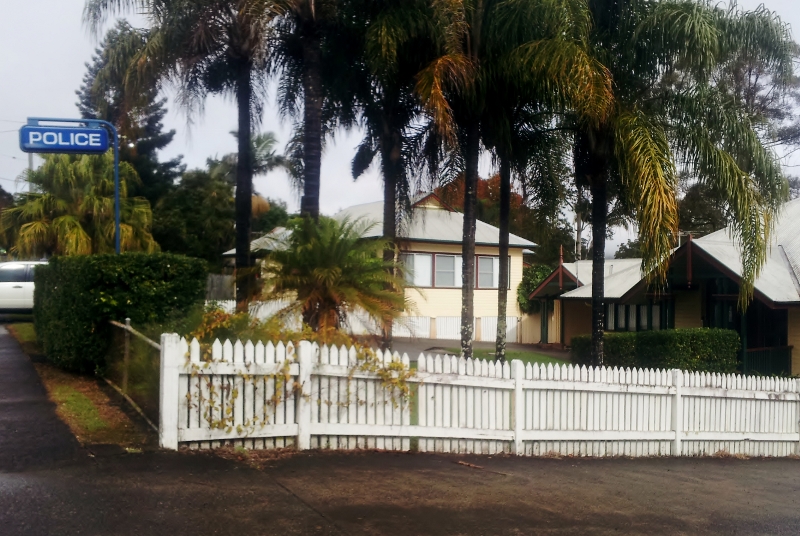
The Police station in Nimbin appeared closed

The Police station in Nimbin appeared closed

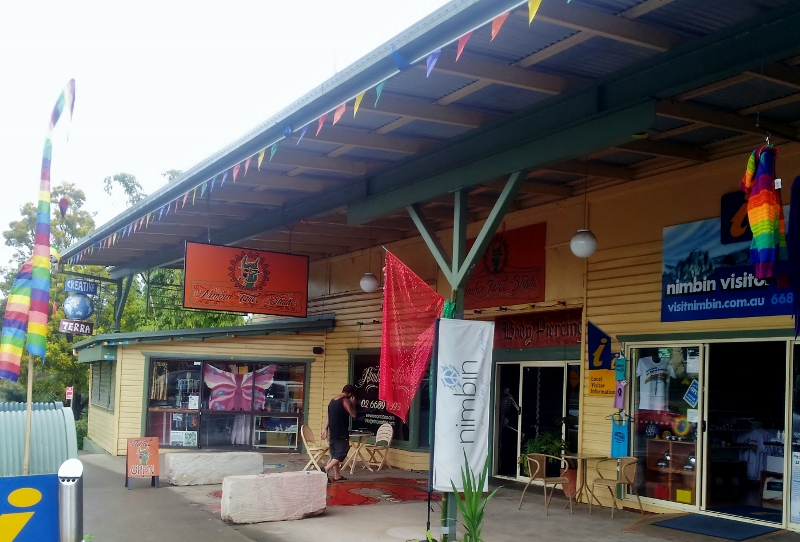
Nimbin, a real (dirty) hippy town where marijuana flows like water and the clouds are green. Not that the stuff is legal but the inhabitants don’t mind and actually use it as a tourist attraction.

This is where hippies retire and grow old after traveling from one festival to the other. In fact, this town sort of started out as a festival. Back in 1973 it was a town like any other until some people organized a week long hippy festival. The festival was so successful that the hippies just stayed in town and sort of took over. They have a weekly newspaper dedicated to weed, numerous shops selling all the paraphernalia, and people offering Hydro on the street.

As always, the fact that everyone is into something, makes me do the exact opposite, so I didn’t even check the prices. I can pass on the recommendation that, just in case you plan a visit, don’t buy from the street venders, instead go into one of the shops and ask around.

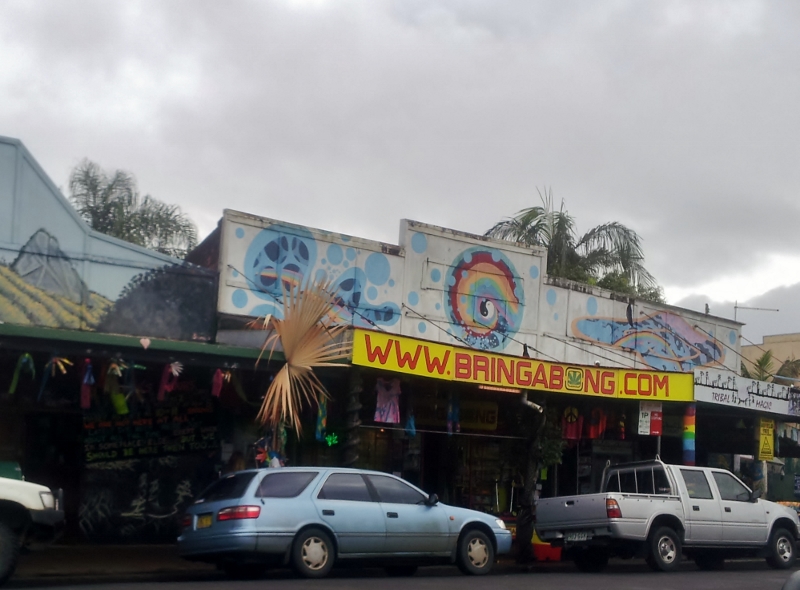
I couldn’t smell weed on the streets but I could definitely see its effects, like red eyed zombie people slowly walking down the street almost getting run over. Besides that, there seems to be a strange connection to rainbow colors and second hand sales which dominate the tiny, one street, town. There are also organic food stores, cafes and some galleries, but if anyone’s interested in making some cash I’d recommend opening a munchies food place which is painfully missing.

need I say more?

need I say more?


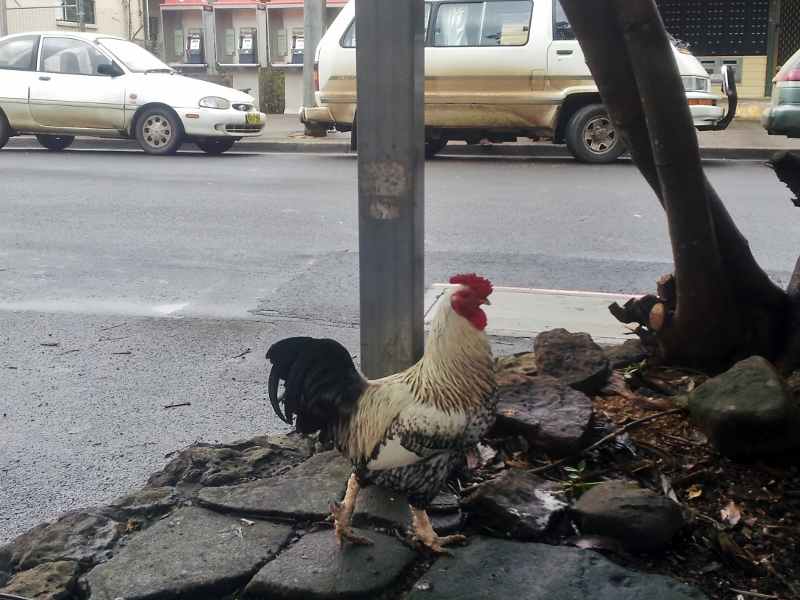
Yep chickens roam free in the street

Yep chickens roam free in the street


How many rainbow color objects can you find in the pic?

How many rainbow color objects can you find in the pic?


In comparison to Nimbin, Byron Bay, which is an hour’s drive away, is where the hippies that want to make money come to. The constant flow of tourist in this pretty surfer town is a capitalistic hippie’s dream comes true. Restaurants, bars, clothes stores and surfing gear, along with backpackers on every corner, all overly priced with mediocre quality. Even the parking costs $3 an hour! The Art Factory backpackers I’m staying in is a micro-cosmos of the town. It’s beautiful, well designed but there are no cups in the kitchen and you have to give a deposit if you want to use a pot!

20130531_142846

Byron Bay beach