The Walking not Dead

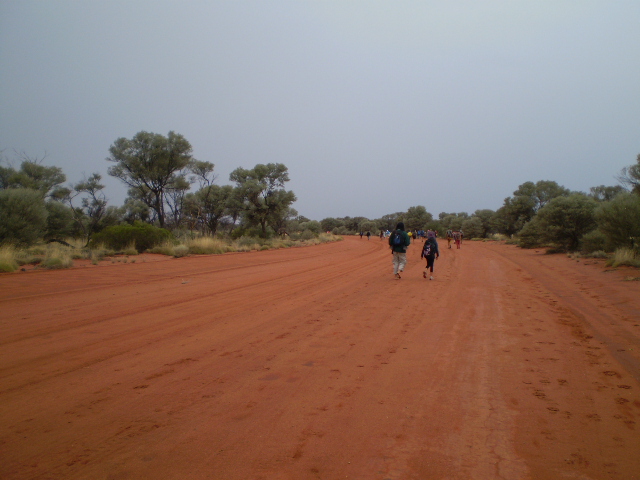
Walking 20 km a day gives one a lot of time. The first day I mostly talked to others but the next day I took upon myself the role of scout, walking in front of everyone with a bright yellow vest, just in case any car came by. (Yes this is still Australia with the ‘safety first’- over protective mentality I find everywhere).

the path that never ends

the path that never ends

Anyway, it gave me a lot of time to think. And with all the talk about ancestral grounds I began thinking of my ancestors, who as the tale goes, walked through a different desert for 40 years after escaping slavery in Egypt.
Anyone who knows a little geography has to ask why the hell did it take them 40 years to cross a small desert? Well the biblical story tells us that it is a punishment. Most of the Israeli people still had the slave mentality they left Egypt with and did not believe they could conquer the land. That is why they wandered the desert for 40 years waiting for the older generation to die.

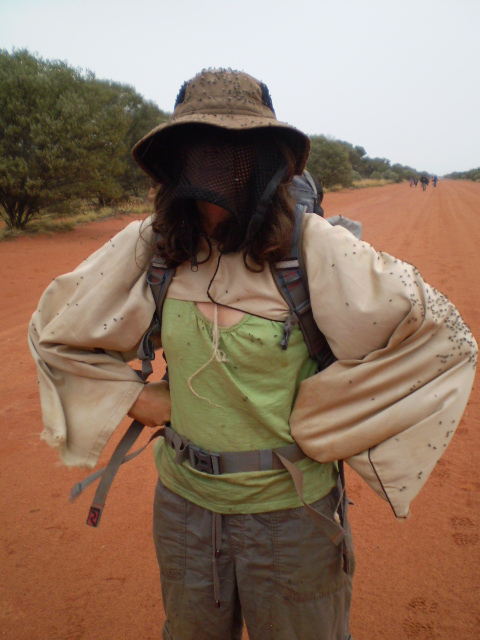
Even the flies couldn't stop me from getting all philosophical

Even the flies couldn’t stop me from getting all philosophical

I started thinking what would have happened if the Israeli people escaping the holocaust would have waited 40 years for the post trauma to fade? Of cause it wasn’t much of an option to the millions of refugees but ‘what if?’
I began thinking of the ‘jewish’ people as a collective ‘meme’ with it’s own propagating agenda.

Many people suffering from abuse as children grow up to recreate these patterns. Abused become abusers or else ever remain with a ‘victim’ mentality staying in abusive situations because that is all that they know. If people act that way, why not entire countries?

No one can doubt the suffering that the aboriginal people have gone through. Yet, the people I met (by no means a representative sample), were preaching a philosophy of ‘we are all one people’. They are teaching their children that they are citizens of the world with equal rights, while still being very adamant on preserving their heritage and knowledge. I was happy to discover that there were rangers that were accepted to the group even if they weren’t from aboriginal descent.

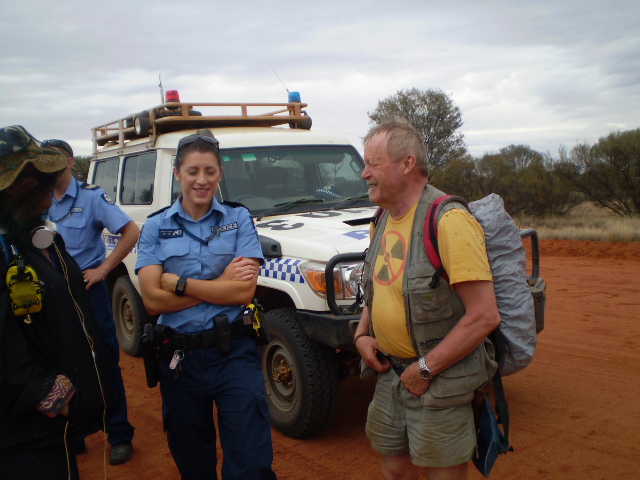
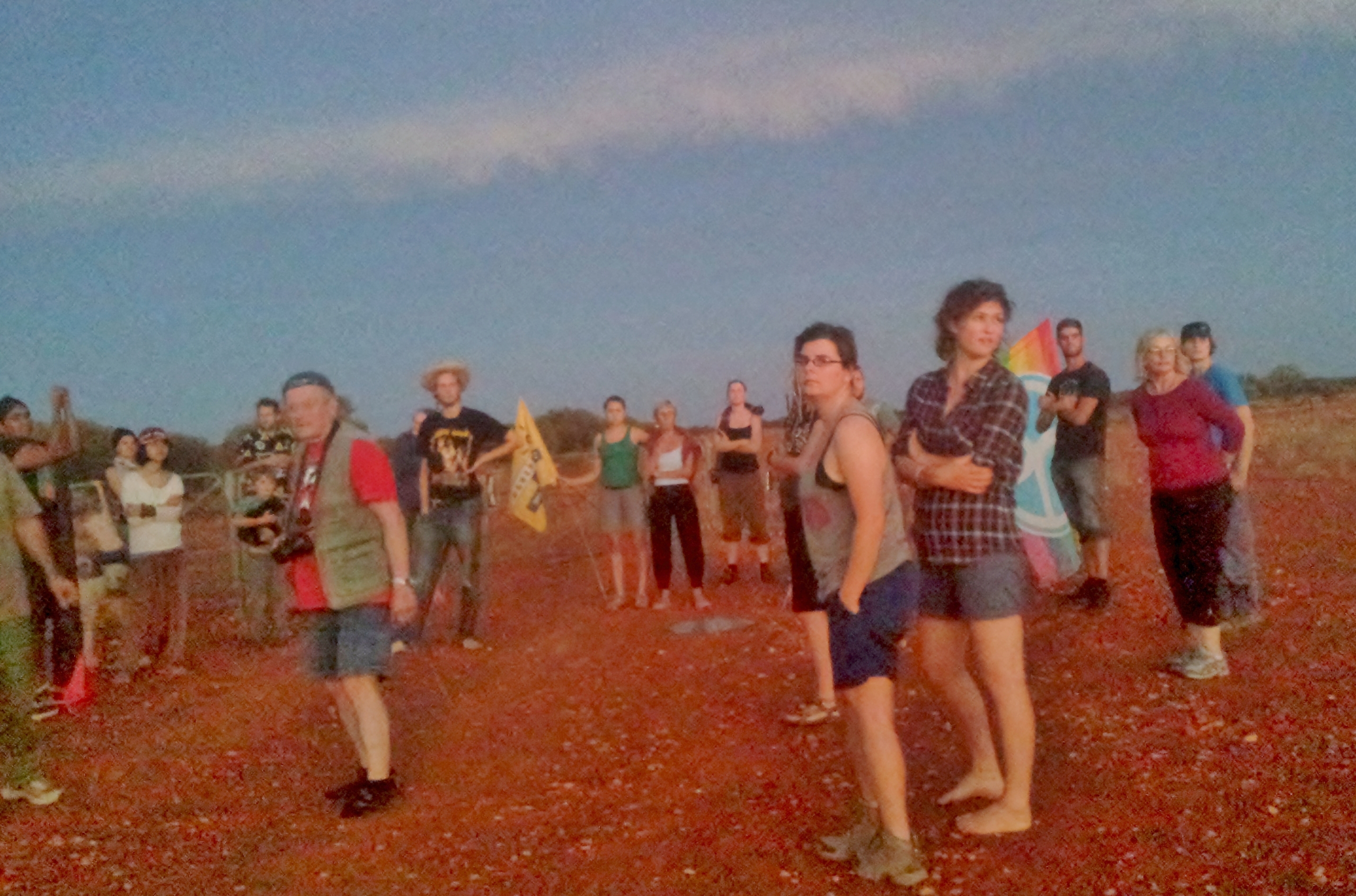
The police came to visit on our walk. warning us of the upcoming storm.

The police came to visit on our walk. warning us of the upcoming storm.


Why the hell can’t Israel do the same? Is there any chance the Israeli nation can escape the ‘battered person’ syndrome I believe it is suffering from? And if so would there even be an Israel? Well, just because I’m asking questions doesn’t mean have answers. But if you do, let me know what you think.

Hunter Gatherer

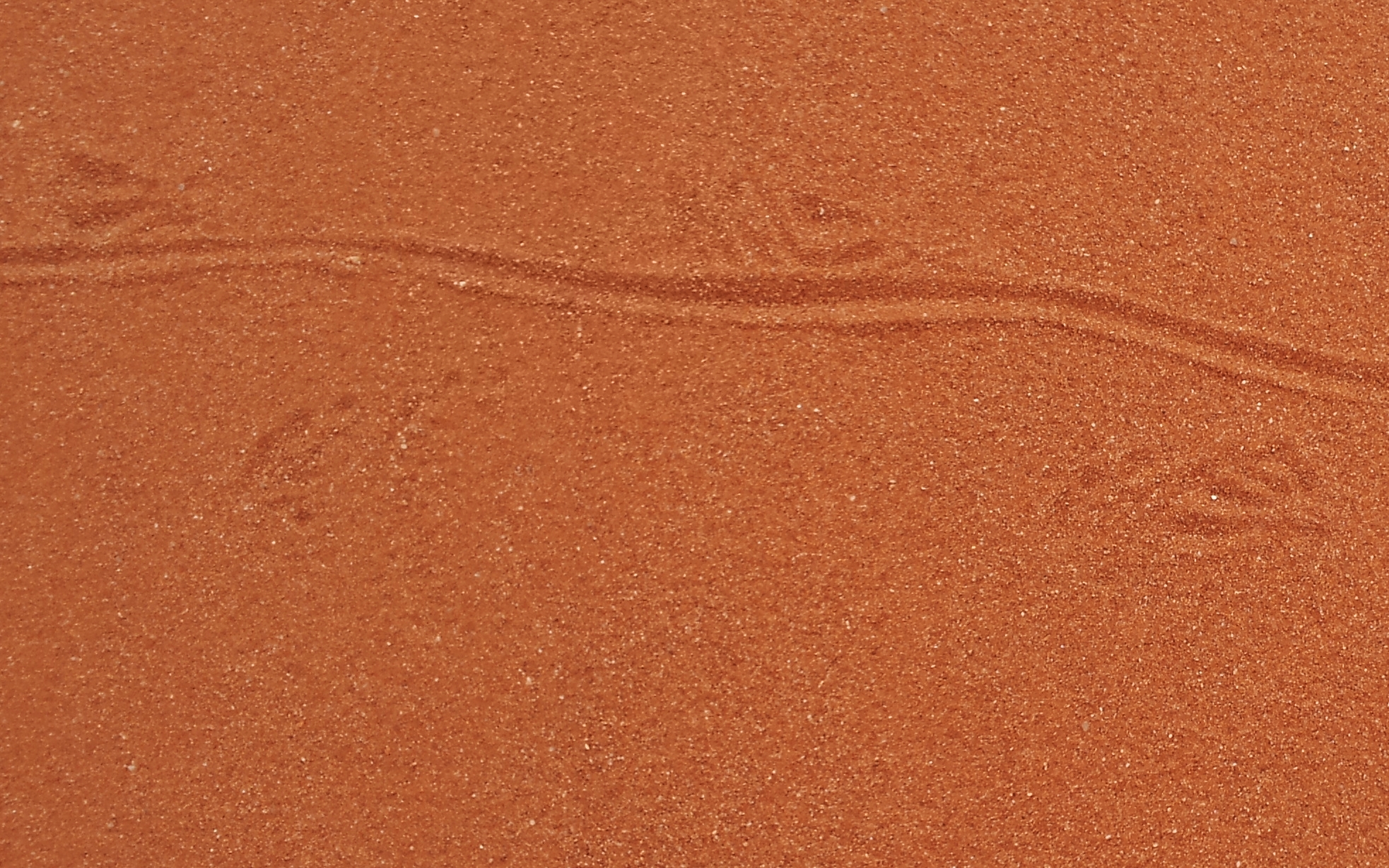
Zach is driving the car down a dirt road at 60 kmh beside him Shaun is holding the hunting rifle, both of them belong to the Walkatjurra Rangers, an organisations  dedicated to preserving nature along with the ancient aboriginal knowledge and culture. I’m sitting in the back between Rosaline an aboriginal elder and Bon Bon a young female ranger. All four are looking out of the windows utterly focused. “Stop!” Rosaline shouts and the car halts in a jerk. We all run out to check out the iguana tracks Rosaline somehow managed to see as we zoomed by. The hunt is on!
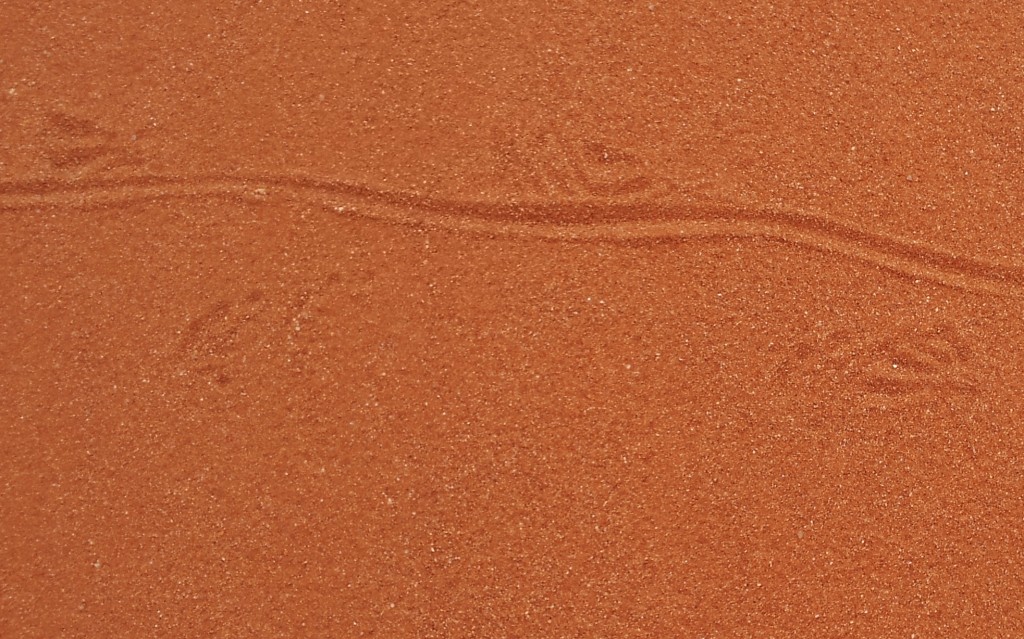
Iguana tracks

Iguana tracks

We didn’t catch anything that day but the passion for hunting and the love of meat is apparent at every dinner. The camp food is mostly vegetarian which the rangers are keen to supplement with meat. I asked Kato, a Wongatha elder, who explained that the traditional diet of aboriginals was indeed high in protein, but it was actually mostly vegetarian coming from Nuts that grow on local trees. The hunting and meat are for the glory!

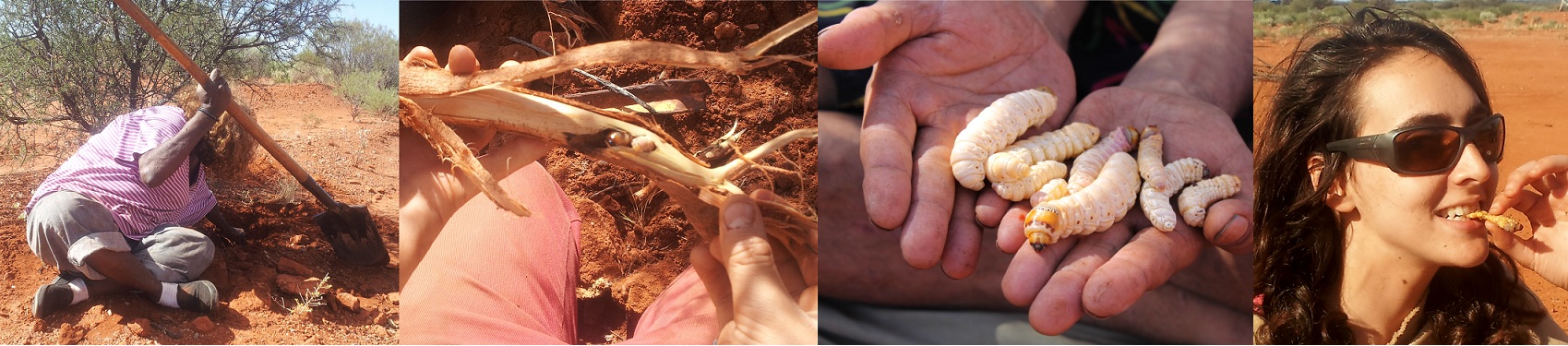
Hunting is not the only way to get meat, the next day I try to help Rosaline and Bon Bon collect Witchetty grubs from roots of bushes. It’s hard work, digging at the base of the correct bushes and taking the worms out of the roots using a stick, but I have to say that the cooked grub is a delicacy. The crunchy outside with the fat meaty inside remind me a little of shrimps cooked in butter.
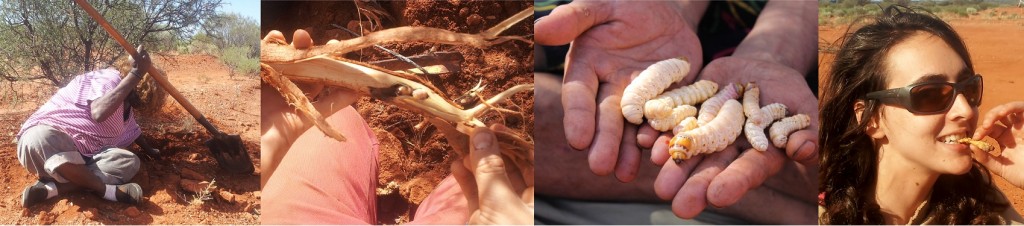
Gathering Grubs!

Gathering Grubs!

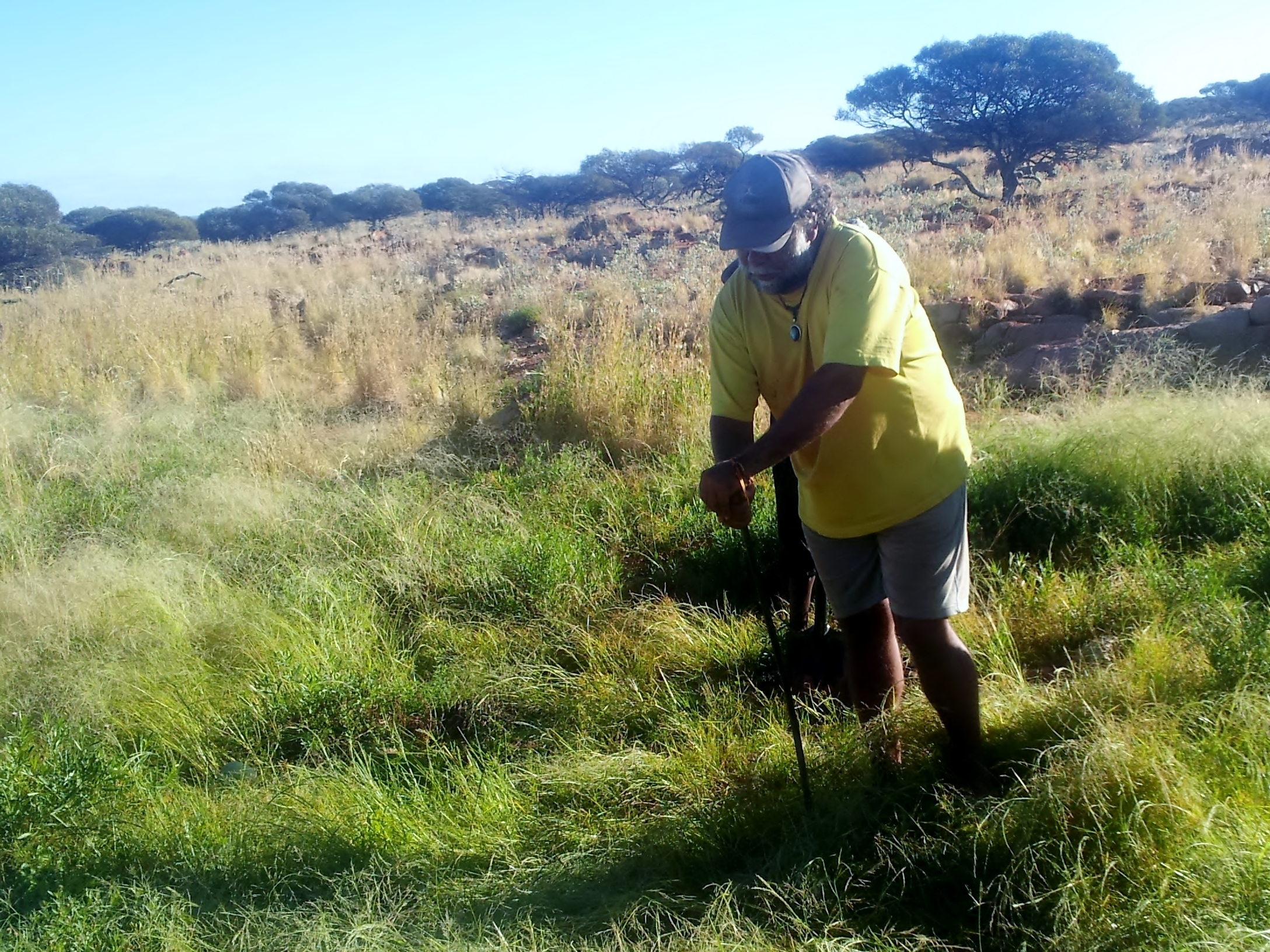
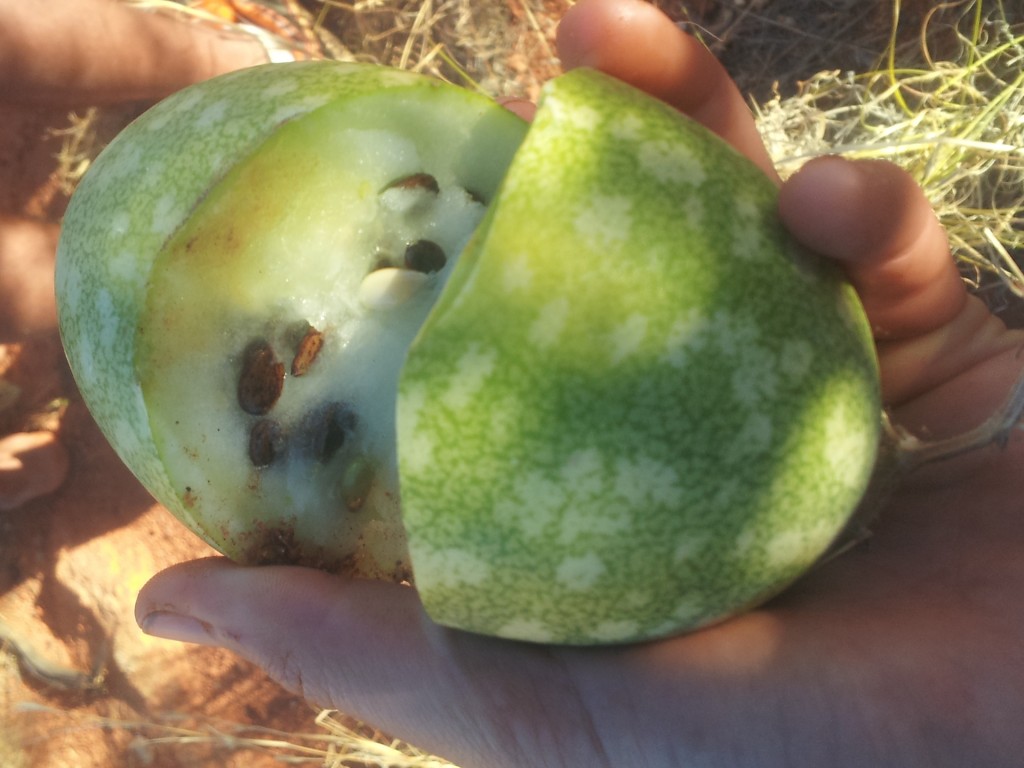
Surviving outdoors isn’t only about meat. Kato demonstrated how to find clean water and explained about medicinal herbs and just as important poisonous plants.
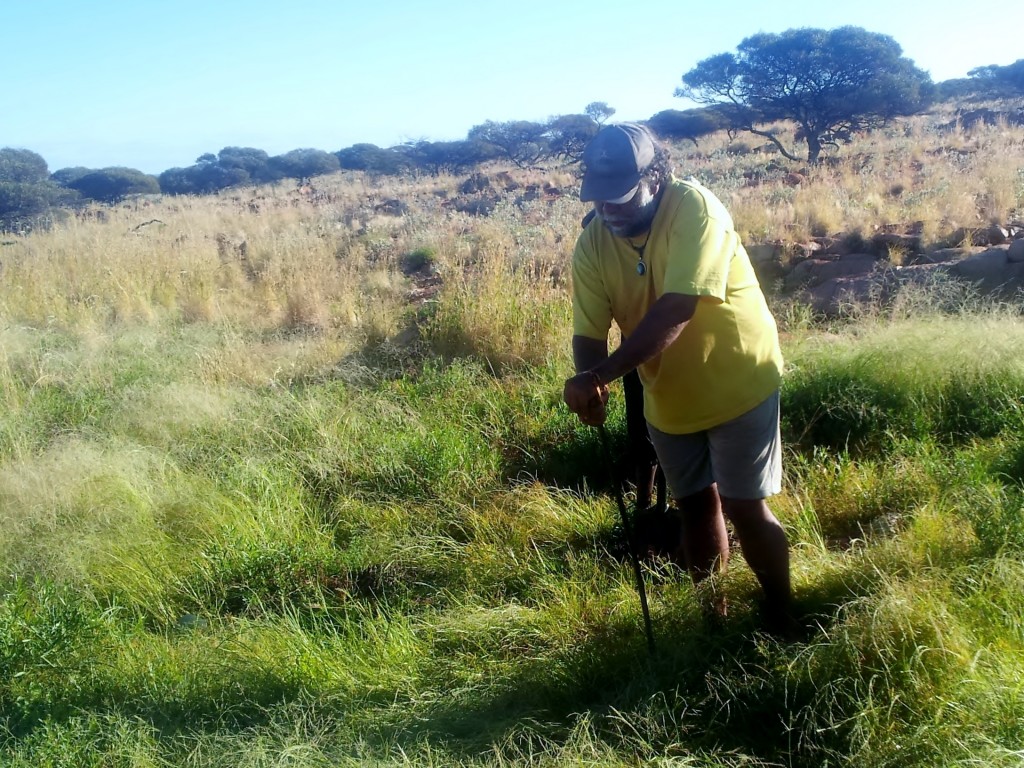
Kato looking for clean water.
Kato looking for clean water.

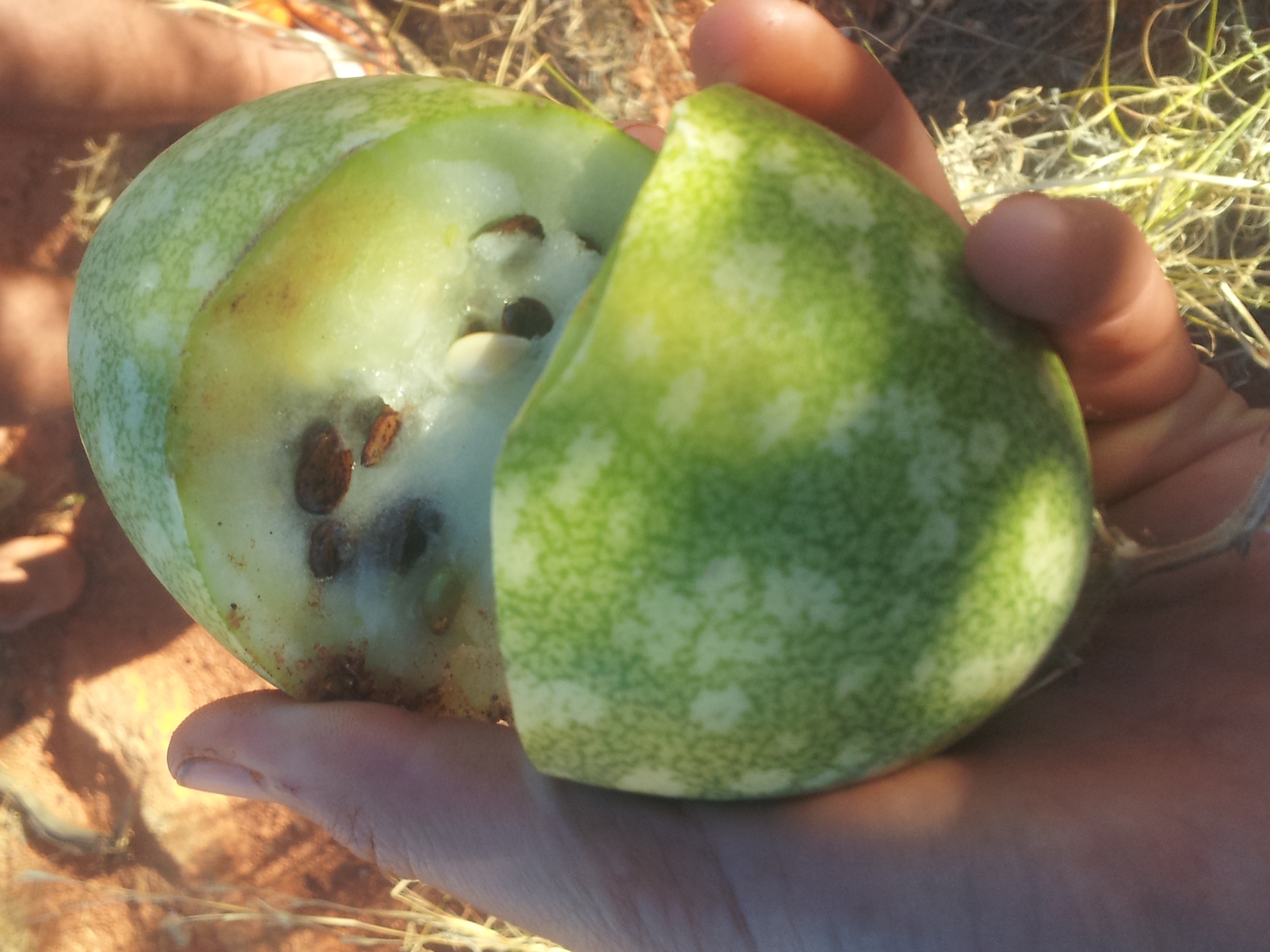
It only looks like a watermelon, don't eat!

It only looks like a watermelon, don’t eat!


It’s wasn’t only the Ranger’s survival skills that I was fascinated by; their belief system based on what they call ‘dream time’ was a great mystery to me. From what I gathered dream time is not only creation stories of the land (that used to help people navigate as the whole village used to sing the songs every morning). It is much more; it is the disconnectedness of the whole of creation, a little like chi in eastern philosophy. In the ‘dream time’ characters had animal aspects as well as a landscape, a snake could be a person could be a chain of mountains.
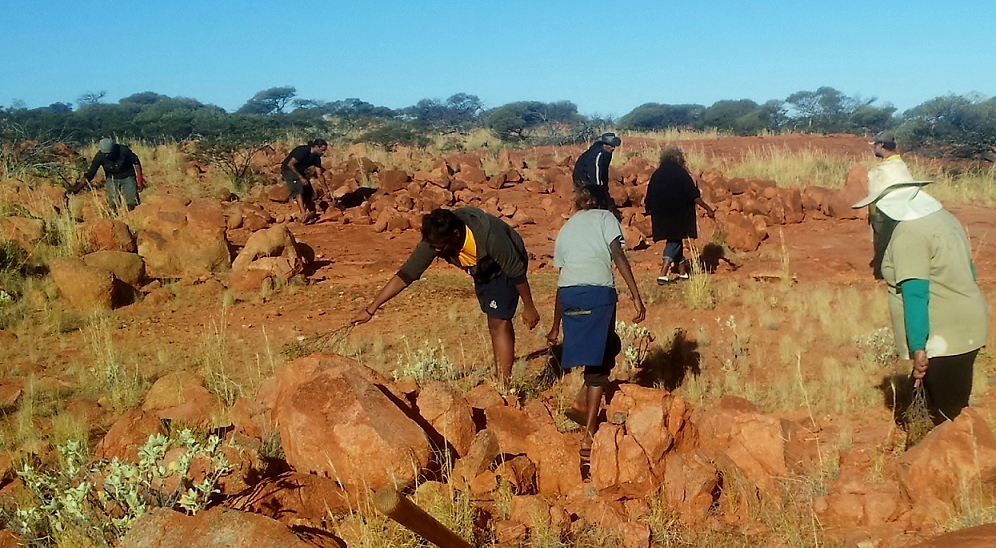
Ceremony in part of the land that has "dream time tales" and historical significance to the aboriginals. It was saved from the mining companies  due to the local's struggle.

Aboriginal ceremony in part of the land that has “dream time tales” and historical significance to the aboriginals. It was saved from the mining companies due to the local’s struggle.

Even today many of the aboriginals have totem animals that are chosen for them at birth as well as places that represent them. There is also an aspect of reincarnation in the aboriginal religion. How does that coexist with their love of hunting? Well I asked that and got a very interesting answer from Zach. An aboriginal who has a totem animal will usually not eat his animal but there’s more than that, he also has the responsibility to take care of his animal along with the power to restrict its hunting if the population of the animal is shrinking.
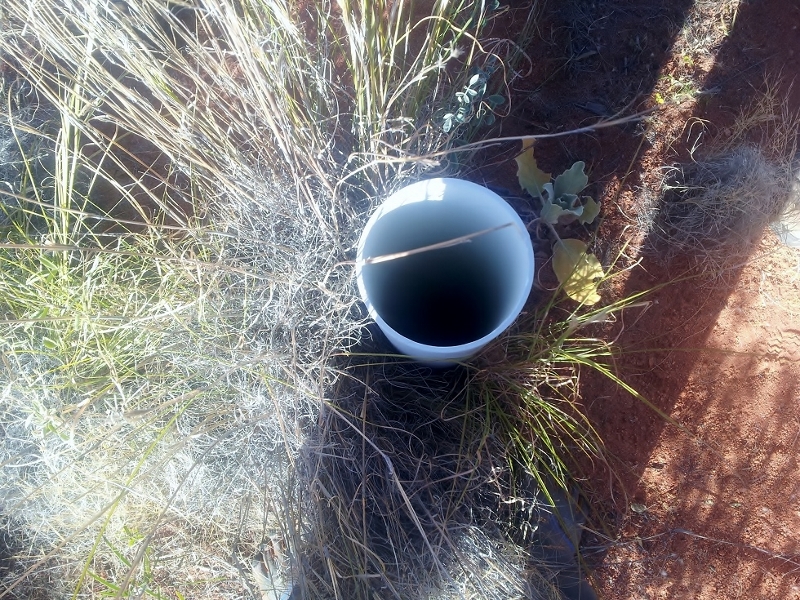
A left deep deep deep hole the mining company left after collecting samples.

A  deep deep deep hole the mining company left after collecting samples.

Unlike many of those on the walk, I don’t think that the fact that someone’s ancestors happened to be on some land before (or after) mine has any relevancy to who the land ‘belongs’ to, but the idea that man and nature should live in symbiosis as was practiced by the aboriginals is something we should all adopt. This is why the thought of mining the land without any consideration of sustainability and long term implication is so vile to many aboriginals. Although some have settled with the mining companies, many because of the fatalistic belief that the government will back the mining company anyway so it’s better to make some cash while they can.
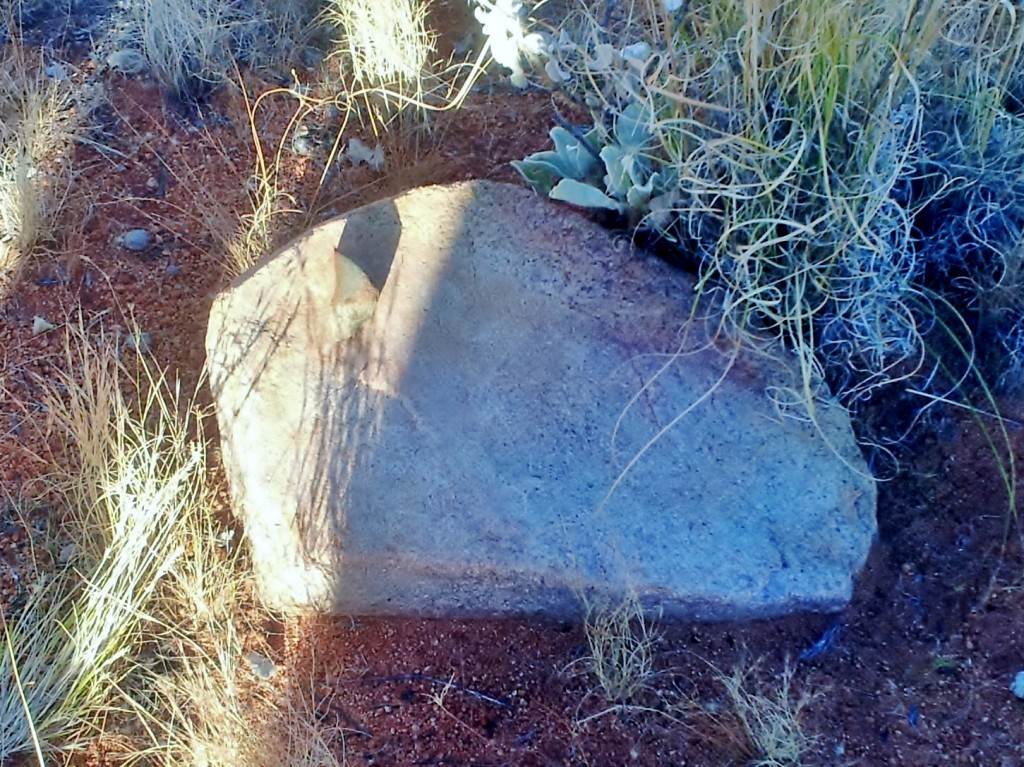
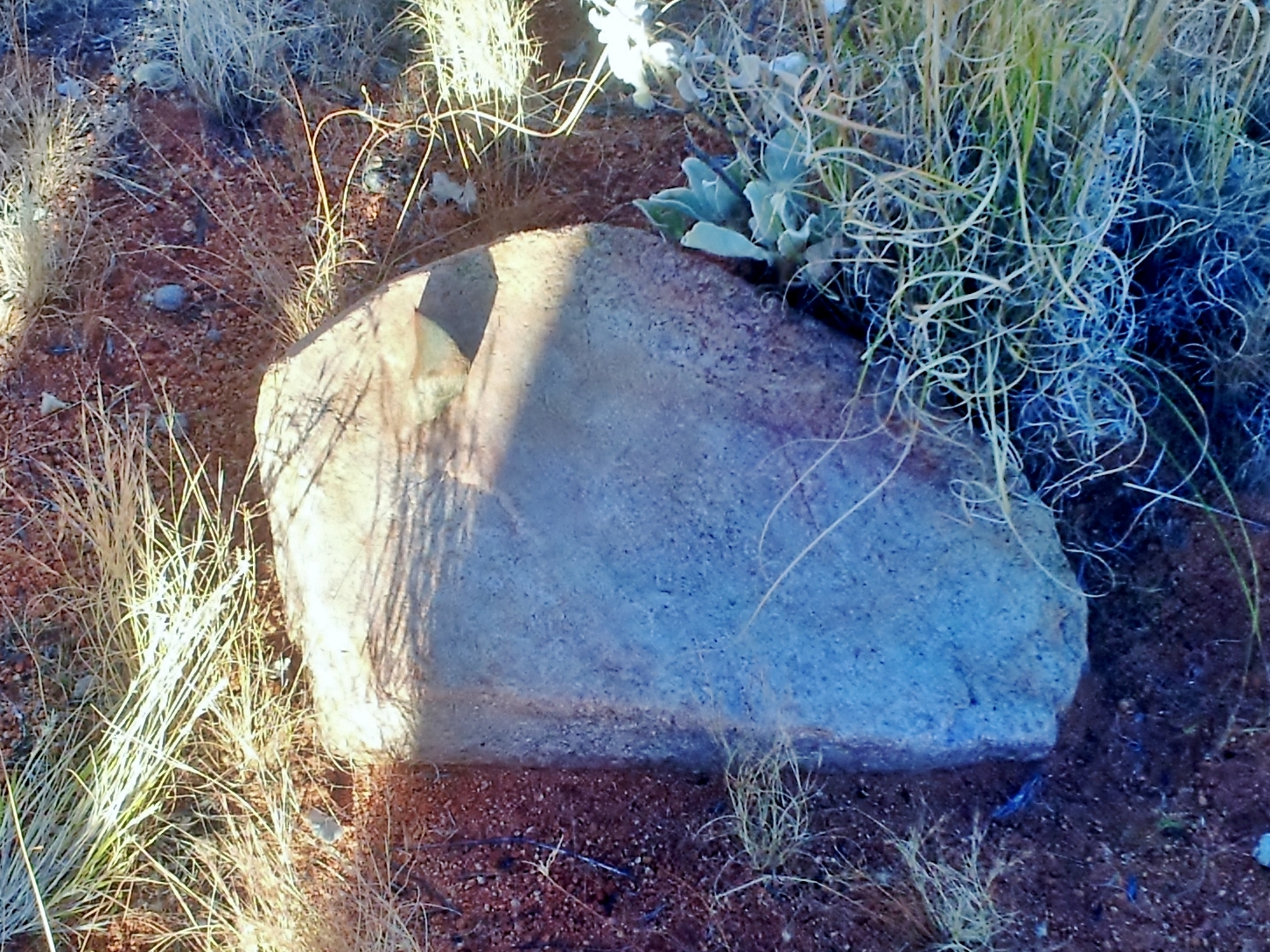
The smoothest stone i ever touched. used to be used by aboriginal women to grind seed on. For some reason (guess) It is not recognized by Australian authority to have archaeological value.

The smoothest stone I ever touched. used to be used by aboriginal women to grind seed on. For some reason (guess) It is not recognized by Australian authority to have archaeological value.

There are many aspects of aboriginal culture that still remain a mystery to me, some of which I think I would totally be against. The segregation of men and women is one of these. I tried digging but got very few answers. There are separate areas in the land that are for “men only” or “women only” where secret ceremonies were held, whether this is still practiced today is hard to tell. It also turns out that a didgeridoo, the traditional musical instrument of some tribes (not the tribes I met), are forbidden for women. I heard many different reasons from “it’s harmful for the womb” to “it’s considered the extension of a male sex organ”, none of which I would ever accept.
I also tried to understand more about the way the Ranger’s organisation is managed. It is based on the traditional aboriginal tribal organisation which includes elders and community members each having some type of say. Can’t really say that I got it. On one hand it seemed the power was dispersed wonderfully but on the other I understood that there are complex hierarchies based on tribes and lineage. Well, it’s always great to learn that you have more to learn.

Coming up next: The walking not dead
Tribal Life

Before we started on the walk we had two days to get used to camp life and all it entails. Setting up camp, gathering wood, building fires, cooking, cleaning, digging toilets (and using them). Browse through the pictures to get all the info.

[wppa type=”slide” album=”2″ align=”center”][/wppa]

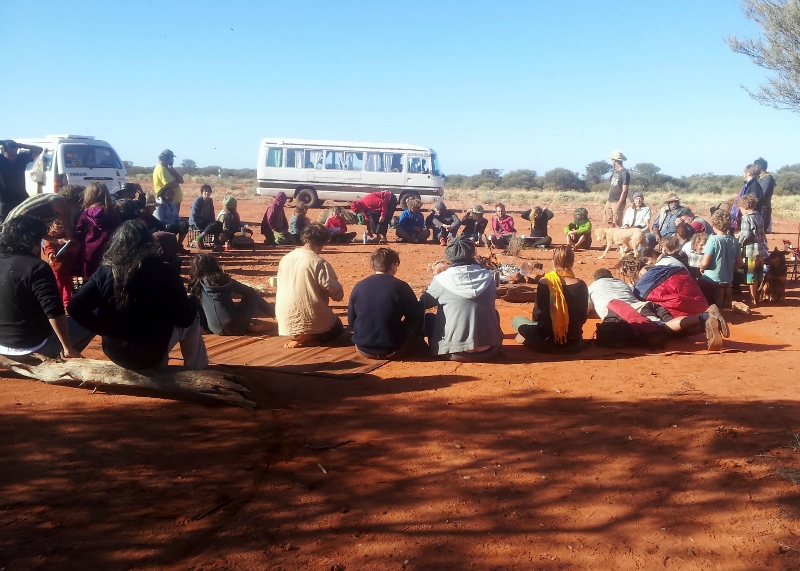
Despite the many jobs and hardship of life in the desert the group remained amazingly conflict free. This has a lot to do with the way it was managed through the circle! All the info and decisions are made around this circle which surrounds the central camp fire. The circle usually meets twice a day, after breakfast and before dinner. There were ‘leaders’ in the circle but their only position was to facilitate it. All people had equal say. Most times people’s suggestions were agreed by everyone and it was quite easy to find common ground but there was a very strong feeling of avoiding conflict to the point of hypocrisy which made me think how long this system could hold up before something boils to the surface.

The Circle

The Circle

As for the work, at the beginning of the week a roster sheet was passed out with all the tasks that needed to be done and people were asked to fill their names in. As I wanted to learn as much as possible I signed up for a different task each day. One of the tricks I noticed, was to make sure there are lots of helping hands for each task, that way even a seemingly hard task like cleaning the toilet only takes a few minutes, as every person has to do only one small part of it. It probably isn’t the most efficient way but it worked. In fact, one only had to work on average around three hours a day (including packing and unpacking your own tent) to make sure the camp runs smoothly. It did help to have some real workaholics that kept on going and going.
The extra time we had was used for playing music, dancing, creating art, getting to know each other and learning more about uranium mining, which the entire second day was dedicated to.

The Fukushima nuclear reactor meltdown

Senator member, Scott Ludlam, from the greens flew in with some media and other activists. We heard about higher cancer rates in rural communities near Uranium mining sites, about nuclear reactor accidents like Fukushima, radioactive waste disposal and about the economic inefficiency of Uranium mining and Nuclear Power. In contrast to their ‘hippy’ looks and attitude the organizers surprised me with a deep understanding about economy and have very concrete plans on how to prevent the Uranium mine from being built by using economic influences. They are sending out reports to prospective investors showing that the mine is likely to lose money as well as buying up shares in the company which allows them to influence it from within! Not all of the arguments convinced me (accidents are not a logical step to stop progress, should we stop driving because of car accidents?) But two facts made up my mind against the Nuclear Power industry, if Uranium consumption is kept up at its current rate it is going to be depleted in the next 50+ years. That fact, in combination with the millions of tons of Nuclear waste created, which will last for more than 10,000 years (some more than a million years) is enough to make me want to stop this industry and move to real sustainable energy.

Another interesting aspect of camp life was the children. Families came on this walk too and there were around 15 children aged 2-13 amongst us. The children were integrated as much as possible in all aspects of camp life and kids as young as 4 were helping around camp. They even had a circle of their own! I have worked with a lot of children and these were extraordinary, curious, friendly, knowledgeable and with so much experience for such a young age. I realized there is something more natural and perhaps even easier for the parents to raise children in this type of community environment. The parents were never far off yet a lot of the time the kids were playing or being taught by someone else in this big ‘family’. Perhaps this is what tribal life used to be like. There was only one thing I was disappointed about, seeing traditional gender roles set in at such an early age, as most the girls helped in the kitchen while the boys went to collect and chop wood.

Coming up next – Hunter Gatherer – What I learnt from the Aboriginal Rangers.

The Anti-Uranium League of Superheroes

I’ve survived the last 8 days in the harsh environment of the western Australian desert walking and camping alongside nearly 100 people from all around the world; I’ve come to call them, ‘The Anti-Uranium League of Superheroes’.  Here are some but by no means all of the superheros I’ve met.

[wppa type=”slide” album=”1″ align=”center”][/wppa]

I’ve done a fair share of activism and been to many protests but the ‘Walkatjurra Walkabout’, was nothing like any protest I have ever participated in. At the beginning I thought the activists were overreacting. The government has indeed given a first approval for the uranium deposit in Yeelirrie to be mined but Toro, the company trying to develop it, still has to come up with hundreds of millions of dollars and get a whole lot of other approvals before anything can go forward.

Proposed Site of Uranium mine. No one was there to protest against!

Proposed Site of Uranium mine. No one was there to protest against!

I also didn’t understand how walking 250 km in the desert and camping in the wilderness could be an effective method of protest. But by my last night there I had realized the organizers ingeniousness and the foresight they had. As Kato, a Wongatha elder, had explained, they were using the strength of their community, bringing people into their space, where they were strongest, allowing them to influence even cynics like myself by connecting them to the land and the culture. Unlike all the protests I’ve been to, they aren’t waiting until the problem comes knocking at their door, they are using the time that they have to create an international network that will be ready to act in their favor if the time comes.

In the next few days I’ll try to share with you the story my Journey and what I learned. The walk is still happening as I write these world and will go on until the 29th of May so if you are keen to join try contacting the organizers.

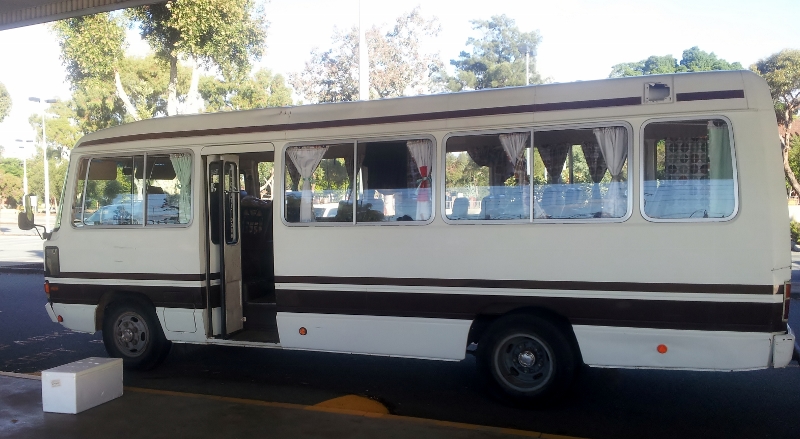
bus

Imagine two days in this bus!

The Swarm

It started with a bus drive, a two days bus drive! Gemma (Aka Ultrabus) was our driver in a bus we nicknamed ‘Patches’ or ‘bardi’- an aboriginal word for worm, as it had seen better days, maybe sometime in the 70’s. We had so much stuff with us I doubted it would all fit, but luckily we had David (Aka Packman) who managed to get everything in place.


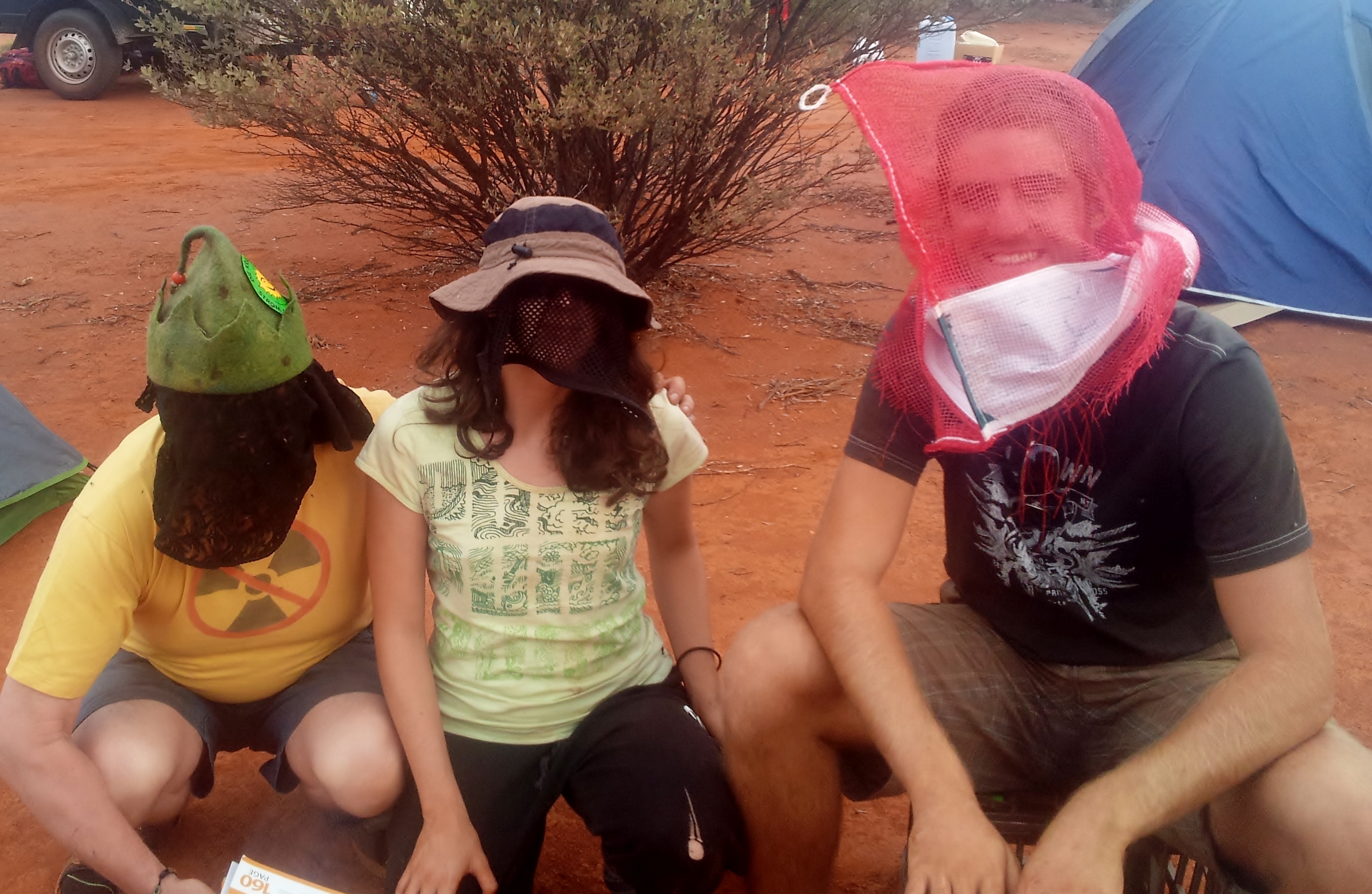
Pekka with laced underwear, me with a shoe bag and alex with an orange bag, all to keep the flies away!

Pekka with laced underwear, me with a shoe bag and alex with an orange bag, all to keep the flies away!


Finally after setting up camp in Yeelirrie I awoke the next morning and exited my tent. Suddenly I was attacked by a swarm of flies, thousands of them everywhere assaulting all of my senses. After trying the Zen approach of becoming ‘one with the flies’, as many of the League suggested, I ran back to my tent and tried to think of something more practical. I was inspired by MacGyver, and used a pillowcase and my climbing shoe bag to create the ‘Desert Walker’ suit! Finally I could go back out and explore camp life.

Coming up next: Camp life

The walk as featured on the news in Australia.

Revivalisity

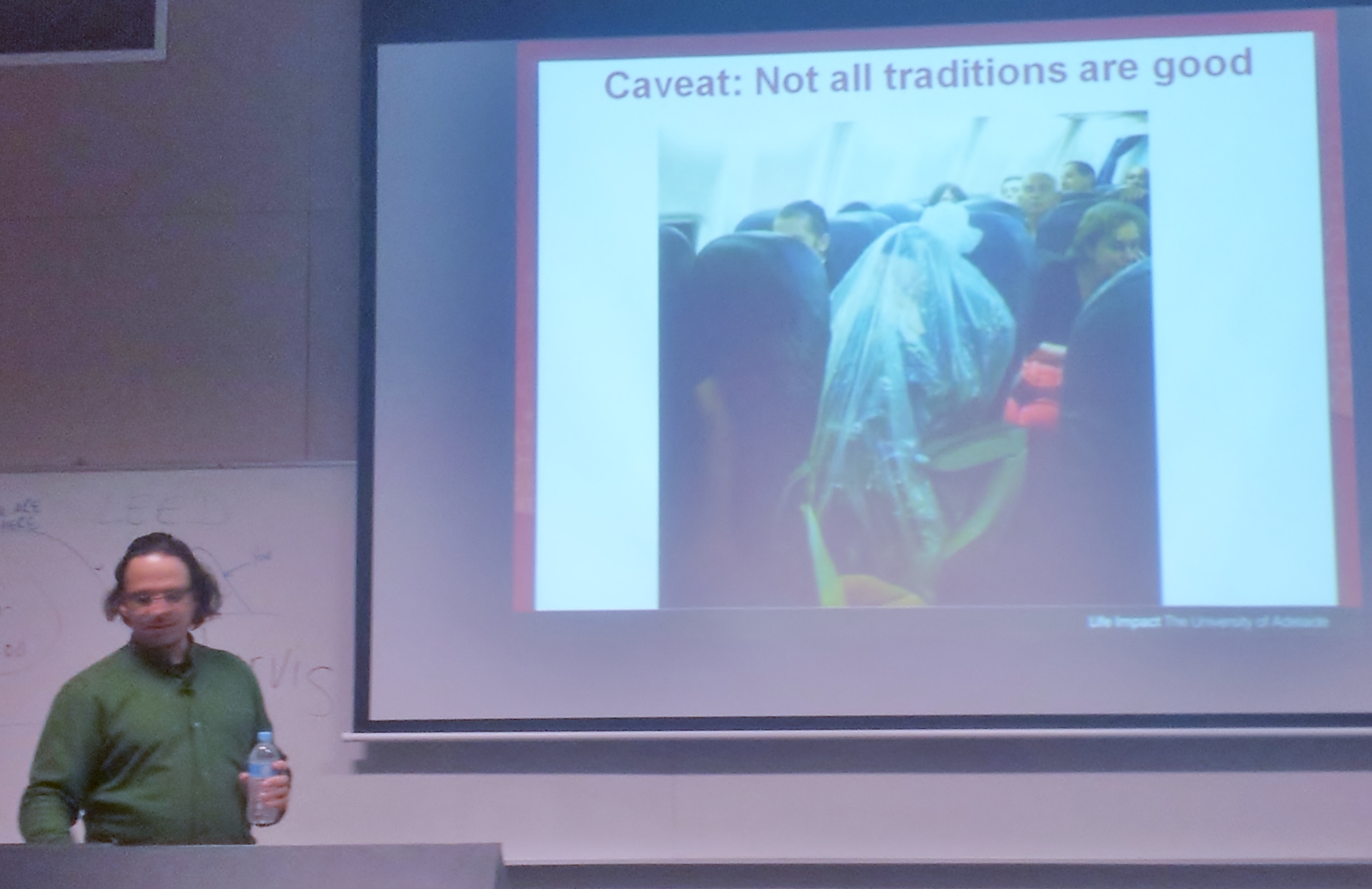
Unlike my university years I actually managed to stay awake for professor, Ghil’ad Zuckermann, lecture about revival of the Barngarla aboriginal language.

20130501_131652

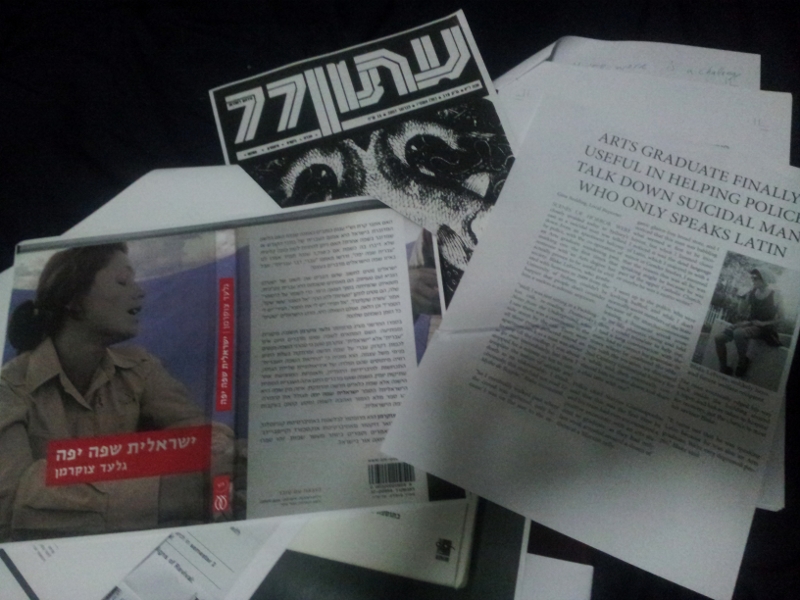
Recognize the image?

20130501_192954 (800x600)

So much to rea

adelaideMaybe because he used Facebook and funny pics in his PPT presentation and gave me so much info I could scan through when the class got too technical for my understanding.


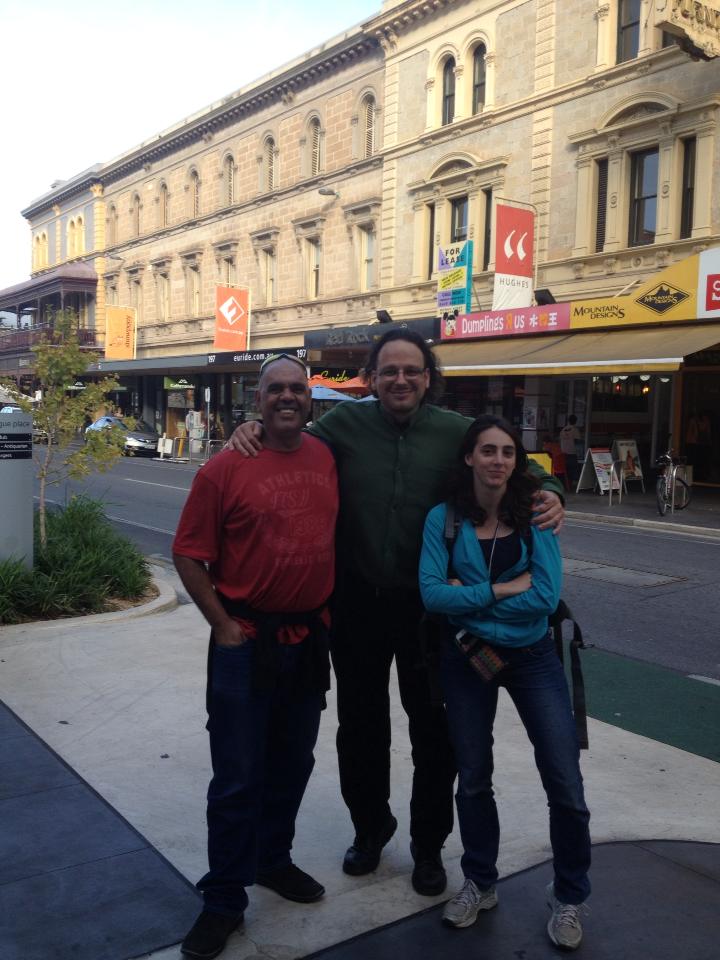
Later we had lunch with Barngala elder Stephen Atkinson who also participated in the lecture. Stephen provided me with personal insights into the dark history of the colonization of Australia and his vision to reclaim some of the lost knowledge and peruse compensation from the Australian government.

20130501_154145 (800x600)

Let’s party!

We concluded with a short tour focused on the Jewish history of Adelaide. Some entrepreneurs must have heard about some of my friend’s, The Taltalistim’s, parties, and turned a night club.