Zach is driving the car down a dirt road at 60 kmh beside him Shaun is holding the hunting rifle, both of them belong to the Walkatjurra Rangers, an organisations dedicated to preserving nature along with the ancient aboriginal knowledge and culture. I’m sitting in the back between Rosaline an aboriginal elder and Bon Bon a young female ranger. All four are looking out of the windows utterly focused. “Stop!” Rosaline shouts and the car halts in a jerk. We all run out to check out the iguana tracks Rosaline somehow managed to see as we zoomed by. The hunt is on!
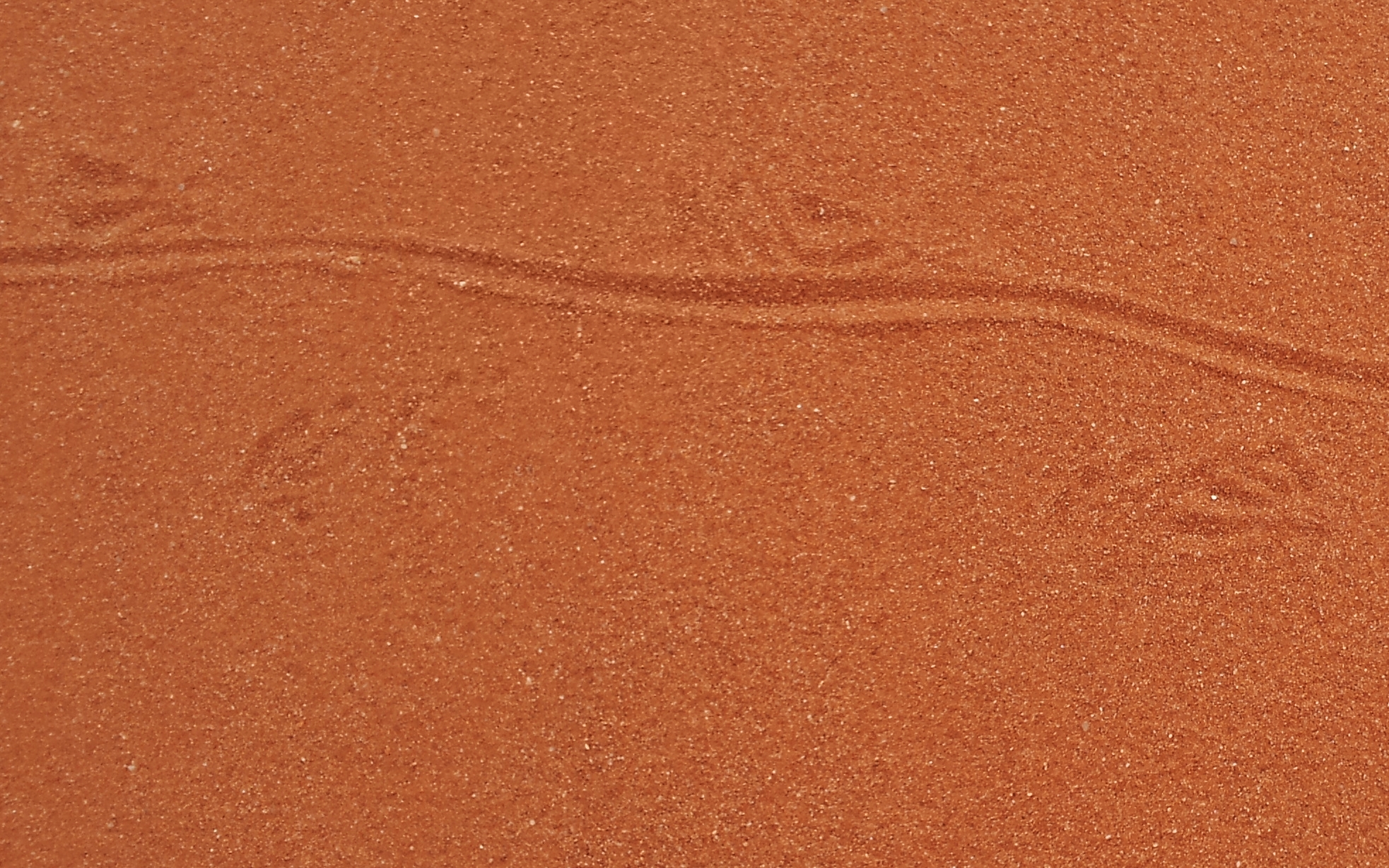
Iguana tracks
We didn’t catch anything that day but the passion for hunting and the love of meat is apparent at every dinner. The camp food is mostly vegetarian which the rangers are keen to supplement with meat. I asked Kato, a Wongatha elder, who explained that the traditional diet of aboriginals was indeed high in protein, but it was actually mostly vegetarian coming from Nuts that grow on local trees. The hunting and meat are for the glory!
Hunting is not the only way to get meat, the next day I try to help Rosaline and Bon Bon collect Witchetty grubs from roots of bushes. It’s hard work, digging at the base of the correct bushes and taking the worms out of the roots using a stick, but I have to say that the cooked grub is a delicacy. The crunchy outside with the fat meaty inside remind me a little of shrimps cooked in butter.
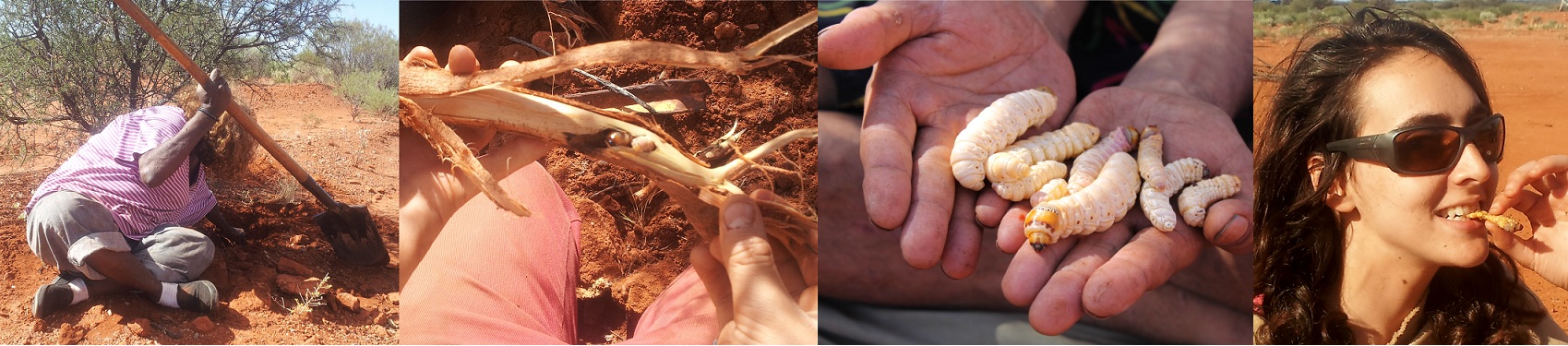
Gathering Grubs!
Surviving outdoors isn’t only about meat. Kato demonstrated how to find clean water and explained about medicinal herbs and just as important poisonous plants.
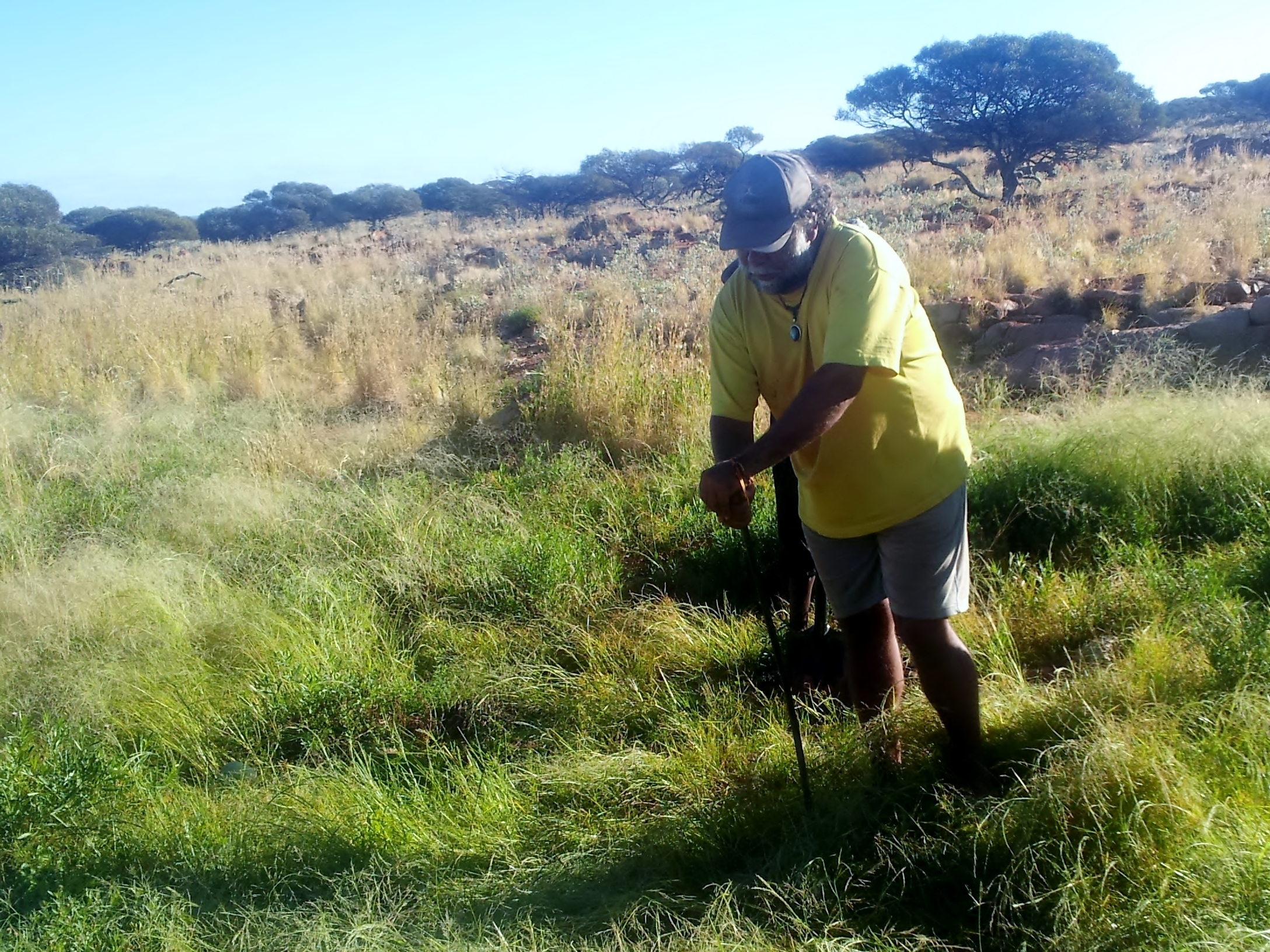
Kato looking for clean water.
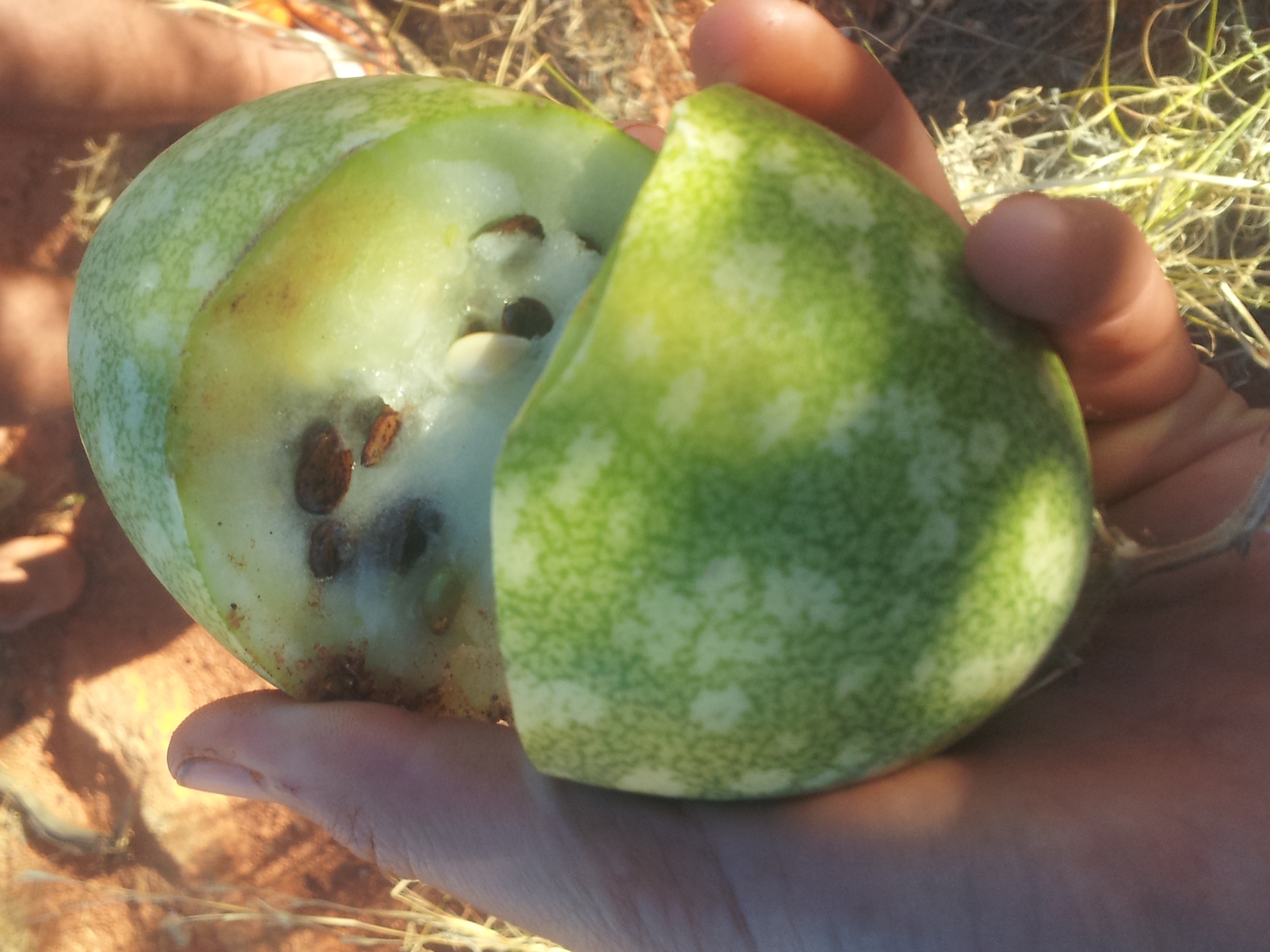
It only looks like a watermelon, don’t eat!
It’s wasn’t only the Ranger’s survival skills that I was fascinated by; their belief system based on what they call ‘dream time’ was a great mystery to me. From what I gathered dream time is not only creation stories of the land (that used to help people navigate as the whole village used to sing the songs every morning). It is much more; it is the disconnectedness of the whole of creation, a little like chi in eastern philosophy. In the ‘dream time’ characters had animal aspects as well as a landscape, a snake could be a person could be a chain of mountains.
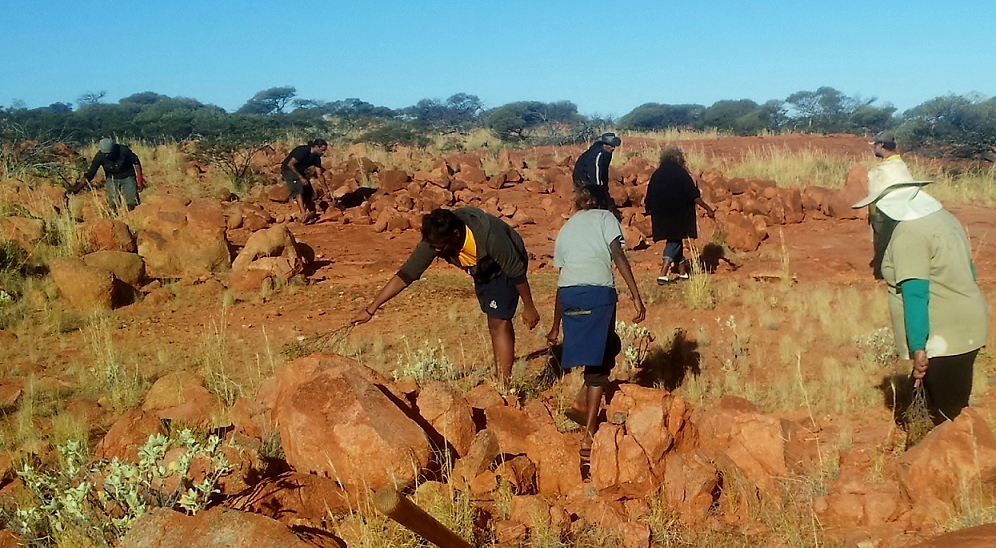
Aboriginal ceremony in part of the land that has “dream time tales” and historical significance to the aboriginals. It was saved from the mining companies due to the local’s struggle.
Even today many of the aboriginals have totem animals that are chosen for them at birth as well as places that represent them. There is also an aspect of reincarnation in the aboriginal religion. How does that coexist with their love of hunting? Well I asked that and got a very interesting answer from Zach. An aboriginal who has a totem animal will usually not eat his animal but there’s more than that, he also has the responsibility to take care of his animal along with the power to restrict its hunting if the population of the animal is shrinking.
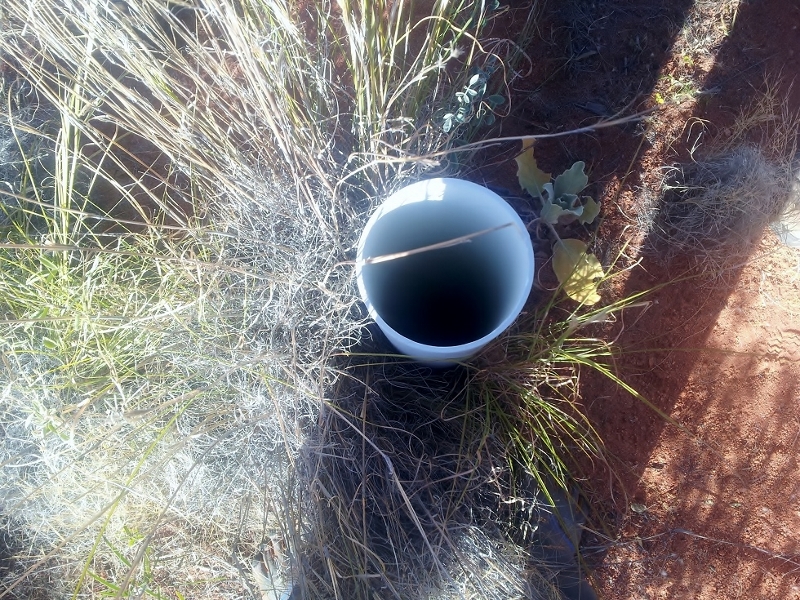
A deep deep deep hole the mining company left after collecting samples.
Unlike many of those on the walk, I don’t think that the fact that someone’s ancestors happened to be on some land before (or after) mine has any relevancy to who the land ‘belongs’ to, but the idea that man and nature should live in symbiosis as was practiced by the aboriginals is something we should all adopt. This is why the thought of mining the land without any consideration of sustainability and long term implication is so vile to many aboriginals. Although some have settled with the mining companies, many because of the fatalistic belief that the government will back the mining company anyway so it’s better to make some cash while they can.
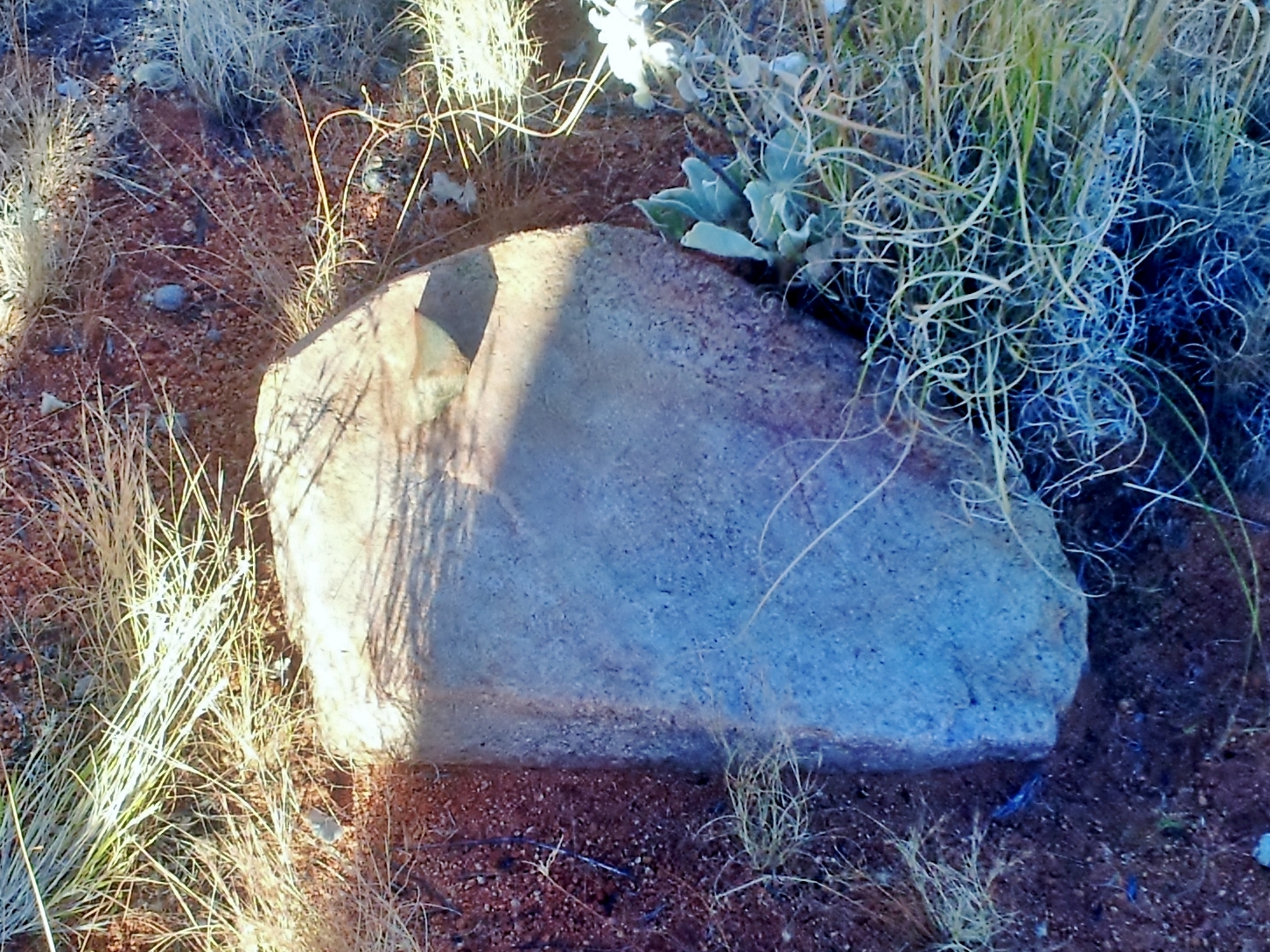
The smoothest stone I ever touched. used to be used by aboriginal women to grind seed on. For some reason (guess) It is not recognized by Australian authority to have archaeological value.
There are many aspects of aboriginal culture that still remain a mystery to me, some of which I think I would totally be against. The segregation of men and women is one of these. I tried digging but got very few answers. There are separate areas in the land that are for “men only” or “women only” where secret ceremonies were held, whether this is still practiced today is hard to tell. It also turns out that a didgeridoo, the traditional musical instrument of some tribes (not the tribes I met), are forbidden for women. I heard many different reasons from “it’s harmful for the womb” to “it’s considered the extension of a male sex organ”, none of which I would ever accept.
I also tried to understand more about the way the Ranger’s organisation is managed. It is based on the traditional aboriginal tribal organisation which includes elders and community members each having some type of say. Can’t really say that I got it. On one hand it seemed the power was dispersed wonderfully but on the other I understood that there are complex hierarchies based on tribes and lineage. Well, it’s always great to learn that you have more to learn.
Coming up next: The walking not dead
I see you share interesting things here, you can earn some additional
money, your website has huge potential, for the monetizing method, just search in google –
K2 advices how to monetize a website